Regis Krampf
Braque Around The Block:
Regis Krampf brings Braque to The Bruce Museum…and moves to Pound Ridge!
Photography: Jimmy ienner Jr.
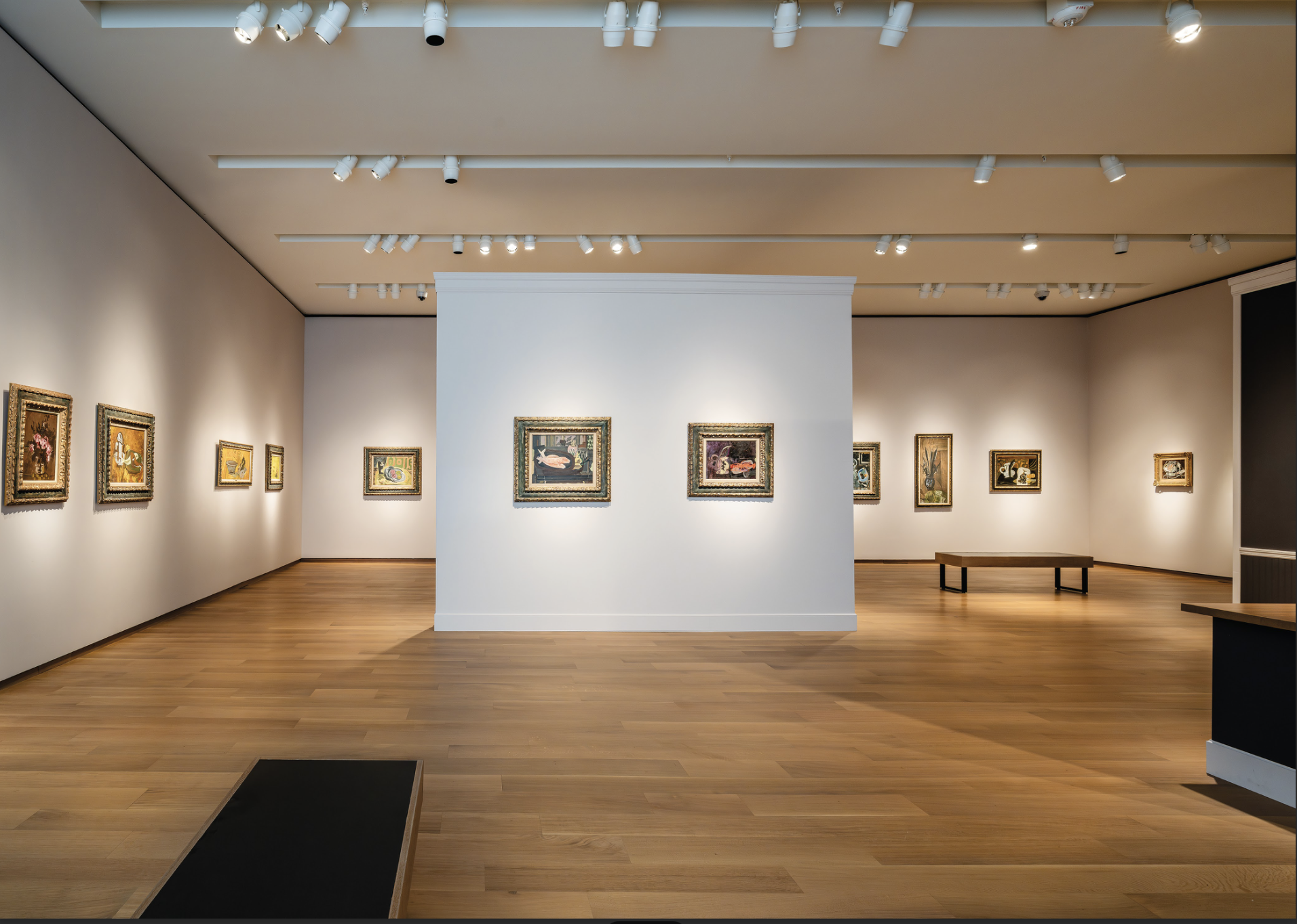
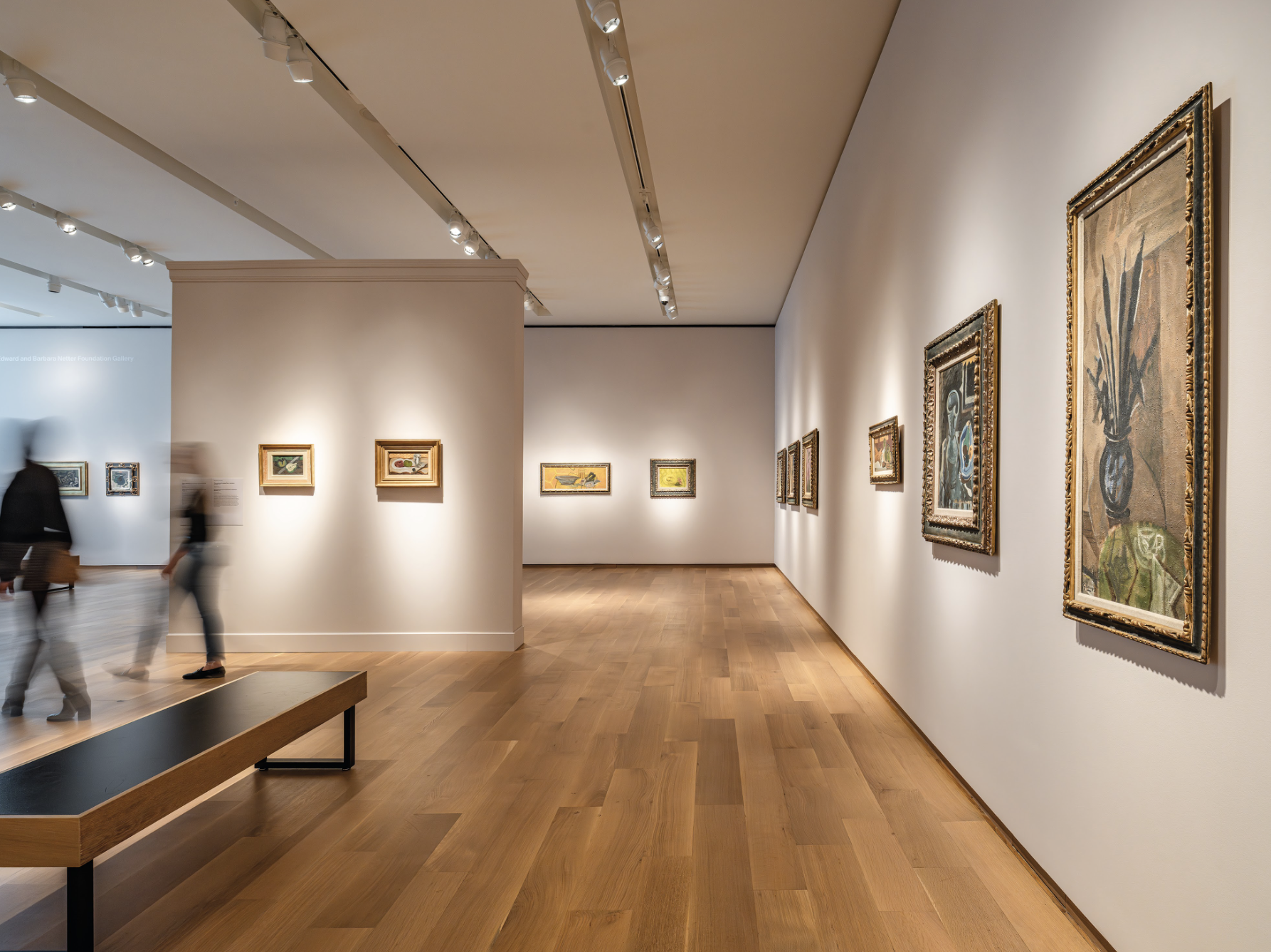
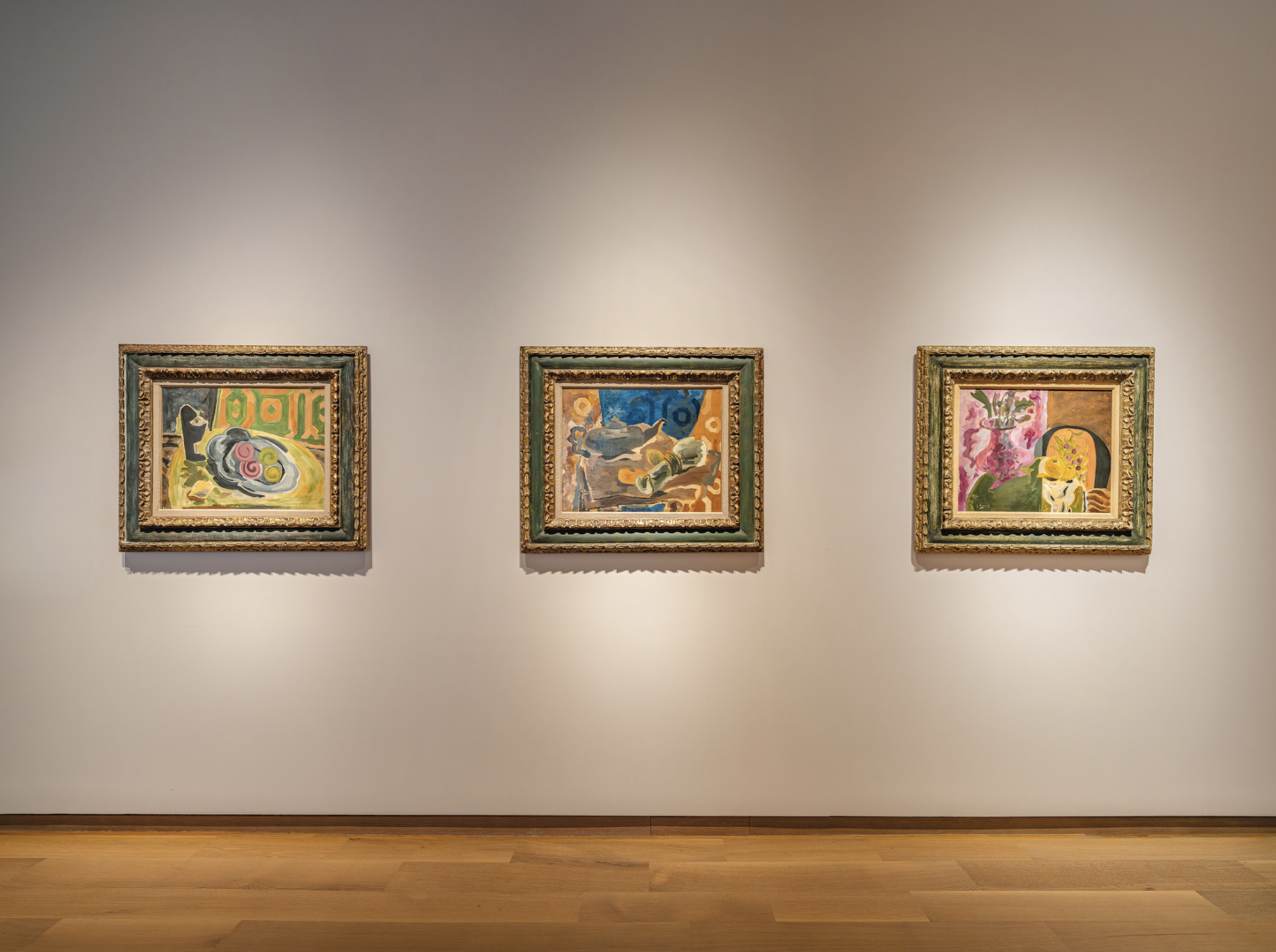
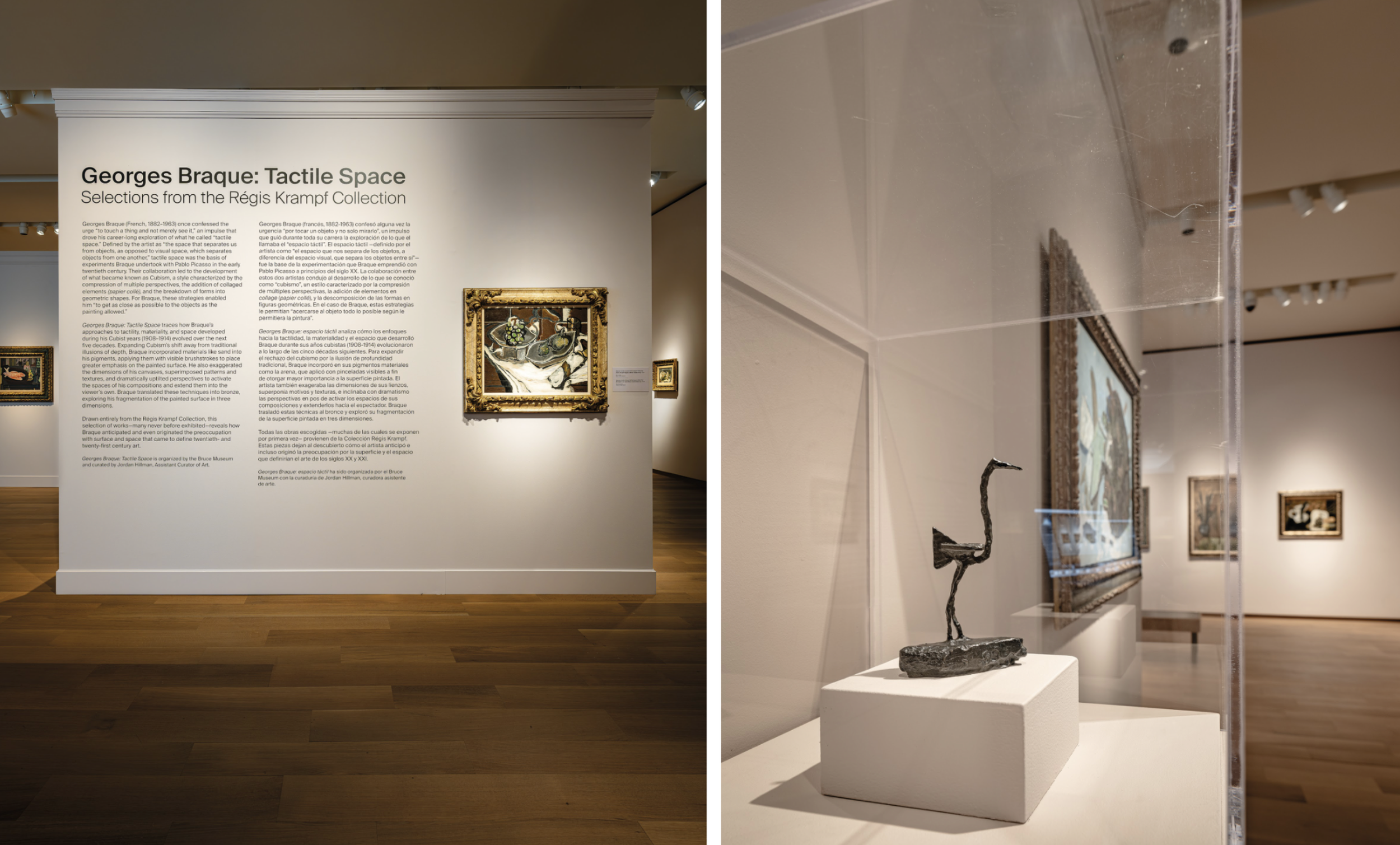
The Bruce Museum at One Museum Drive in Greenwich, is showing Georges Braque: Tactile Space. Selections from the Régis Krampf Collection, through August 2, 2026. The collection is sublime. It includes 39 works, including paintings, works on paper, and sculptures, with a fair sampling of still lives and landscapes and some outstanding human figures. There are some spectacular examples of Braque’s paintings from the 1920s, including one of the showstoppers, Nature Morte a la Serviette, and some absolutely stunning paintings highlighting Braque’s use of color, such as Le Pichet Bleu, which used to hang in Kirk Douglas’s living room, or the large 1956 painting Oiseau et Feuillage with its subtle oceanic tones, or the 1960 Pot et Langouste’s bright red lobster on a very dark background. Viewed in its entirety, the exhibit is interesting and inspiring - and not to be missed by any Braque enthusiast…or anyone just looking for a peaceful respite filled with beauty.
Regis Krampf is a collector, investor, and dealer in fine art, whose holdings include what may be the largest group of Braque’s work in private hands, along with collections of Renoir, Picasso, and Rodin, among other masters…and he’s moved his residence and his base of operations to Pound Ridge!
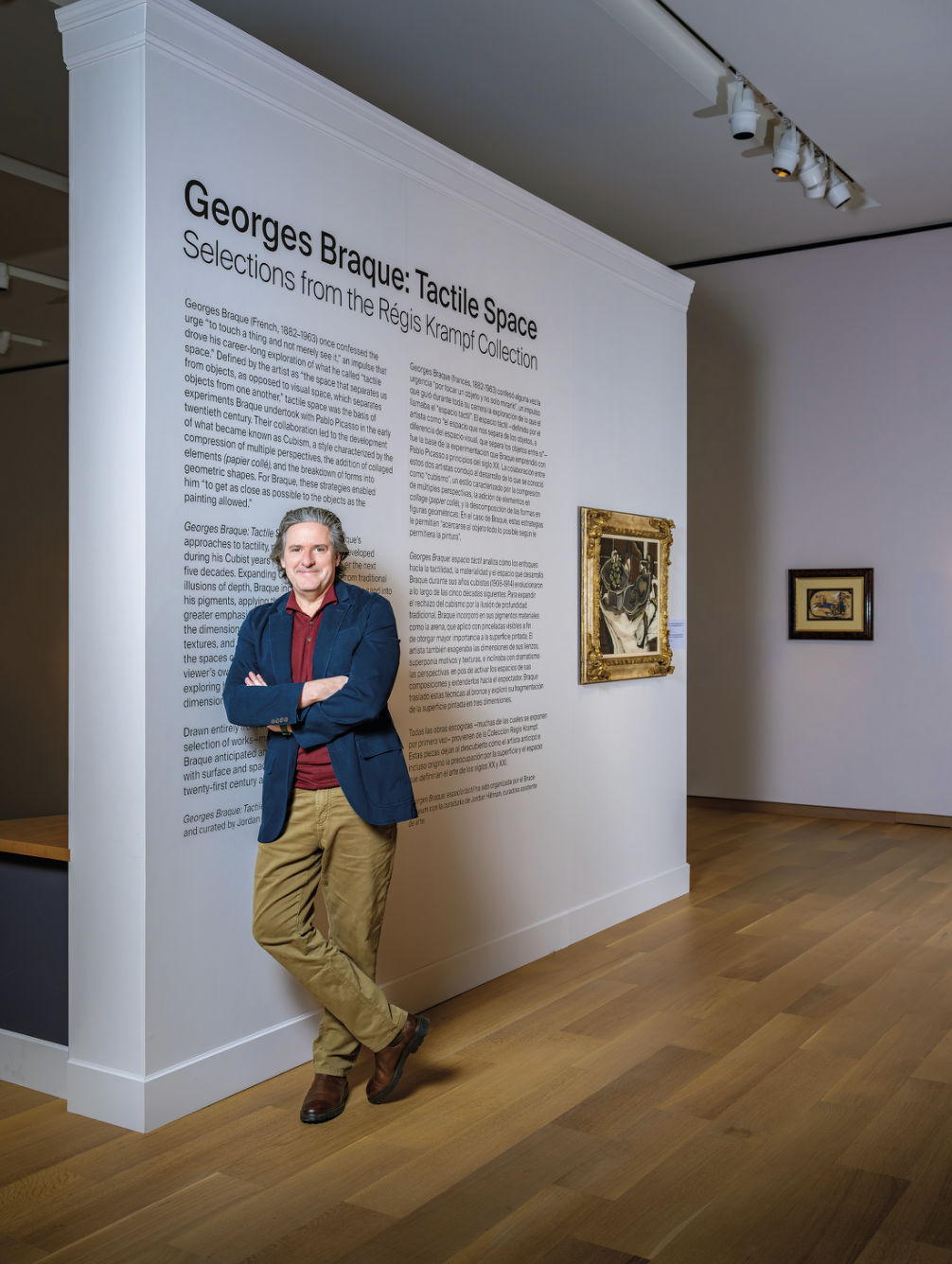
“The exhibition at The Bruce is my way of announcing ‘I’m here!’, and immediately trying to make a cultural contribution to the local community and become a part of the local art scene,” Regis starts out. “The Bruce Museum is an extraordinary institution. I particularly enjoyed working with Dr. Jordan B. Hillman, who made the emphasis of the show about the artist’s use of material, with the effect of making the paintings seem almost sculptural.”
Regis is affable and intriguing. With a thick French accent and an ever present smile, he explains, “My family has been involved with fine art for several generations. My great-grandfather was one of Cartier’s right-hand-men. My paternal grandfather had a notable Meissen porcelain collection that was lost during the War, and some of the paintings in my collection have been in our family for the better part of a century. Growing up, my home was a museum. My father would hang a new Renoir or Picasso on the wall, and then devote all of dinner and the rest of the evening to teaching me everything about the artist, the painting, its context, its importance, and its value. I came to America to study Art History at the University of Massachusetts, and always knew I would devote my life to dealing in fine arts. I am credited with being one of the first to bring the new generation of Chinese artists emerging in the 2000s to the hot market in the United States and Europe, and then I did well operating a gallery in Istanbul from 2012 to 2017 and bringing important Western Art, including artists such as Marc Quinn and Rona Pondick, to the emerging market in Turkey and elsewhere in Asia. …I’ve shown paintings at countless international art exhibitions and owned several galleries in New York and Paris, but you know there’s an old expression in the art world that ‘Every gallery owner wants to be thought of as a collector’.”
“While I remain keenly interested in artists such as Picasso, Rodin, and Renoir, I’m enthralled by Georges Braque, who is properly regarded as the Father of Contemporary Art,” Regis declares. “You know he was the first artist to be exhibited at the Louvre during his lifetime, and that he received a state funeral in the Louvre when he died in 1963. He was recognized as one of the most significant artists of the 20th Century before the Century was half-way over! …And, while Braque may be most famous for his invention of Fauvism alongside Matisse and of course his development of Cubism alongside Picasso - I’m particularly focused on his last forty years of post-Cubist work which, in my view, spawned Modern Art.” During this period Braque painted many human figures and still lives, always maintaining his emphasis on structure, and he employs spectacular colors and textured surfaces to invite the viewer into the space of the painting. As Regis writes in the book he’s published to accompany the exhibition at The Bruce, “It was at this time that Braque was at his most mature [and] confident and had ceased looking for his painting style. A large portion of the Braques I own are from his last five or ten years.” .
“I still do some commercial art fairs, such as Maze in Gstaad and Frieze in Seoul, but I no longer want to be tied to having a gallery,” he announces. “More in the way that great art used to change hands before the proliferation of galleries in the 20th Century and the dominance of the auction houses thus far in the 21st Century, I believe that modern technology and, frankly, the quality of my collection, means that I can now do all my business privately. …And anyone interested can easily get in touch with me by email at regis@regiskrampf.com or check out my website at regiskrampfcollection.com or my Instagram @regiskrampfcollection.
…For the buyer, it’s an opportunity to discretely access and be able to actually choose from museum-quality art, instead of being sold on one painting being marketed by, and with the upcharge of, a gallery or auction house. I think of it as a primary market approach, even though it gives people who aren’t renowned collectors to get a bite at the apple.”
“I probably own about one hundred significant paintings. My collection is fluid and I’ve probably acquired a dozen of my Braque’s in the last five years. As I’m honored to be doing with The Bruce in the current exhibition, I often lend works so more people will get to enjoy this beautiful art. I recently lent a Berthe Morisot to the Turin Art Museum and a Gustave Caillebotte to a museum in Switzerland. While I do occasionally buy or sell a painting at Christie’s or Sotheby’s, the vast majority of my paintings come from collectors, collector’s agents, and dealers who know what I’ll be interested in seeing. …And most of the people who want to buy paintings from me are either interested in a particular painting they know that I own - like any one of the paintings in the exhibit at The Bruce - or they’re more generally interested in acquiring a Braque and will find me pretty early in any search. …At art shows, dealers often refer to me as ‘Mr. Braque’!” Regis laughs.
“I believe that Braque is undervalued,” Regis commits. “I make my living by studying arts markets, and I’m confident that Braque, whose works hang in every major museum in the world and who is thought of alongside artists such as Matisse and Picasso, will eventually have works sold at auction at the kind of unicorn prices we’ve been seeing lately for artists such as Klimt and Basquiat. And while Georges Braque’s 1907 Fauvist landscape, La Ciotat, sold for $6.4 million, including Christie’s fees, on November 17, 2025, and I certainly have Braque works that would command prices in the millions, I think being able to purchase a Braque - that you like! - for something like a couple of hundred thousand dollars is an outright bargain! ..Ultimately, like for every art investor, collector, and dealer, it’s about Taste, Guts, and Money!”
Asked what paintings Regis would hang on the walls of his home if he could select any paintings he desired, Regis responded, “Well, the exhibition at The Bruce would be a good start! …And then I have lots of works in my collection - most of which are in Europe in storage - which I would love to be able to see every day, such as Gustave Caillebotte’s La Barque Rouge, Auguste Rodin’s Le Penseur, Emil Bernard’s Julie la Rousse, Berthe Morisot’s Les Flageolets, and Giovanni Boldini’s Versailles. …And, I suppose if you’d let me go shopping at the great museums of the world I’d like Renoir’s Baigneuses, Picasso’s Pierrot et l’Arlequin, Berthe Morisot’s Le Flageolet, Bonnard’s Corbeille de Fruits, and the Fauvist Derain’s 1905 Le Repos. …But, of course, given some time, I would want to do some trading!”