
Robert Docters
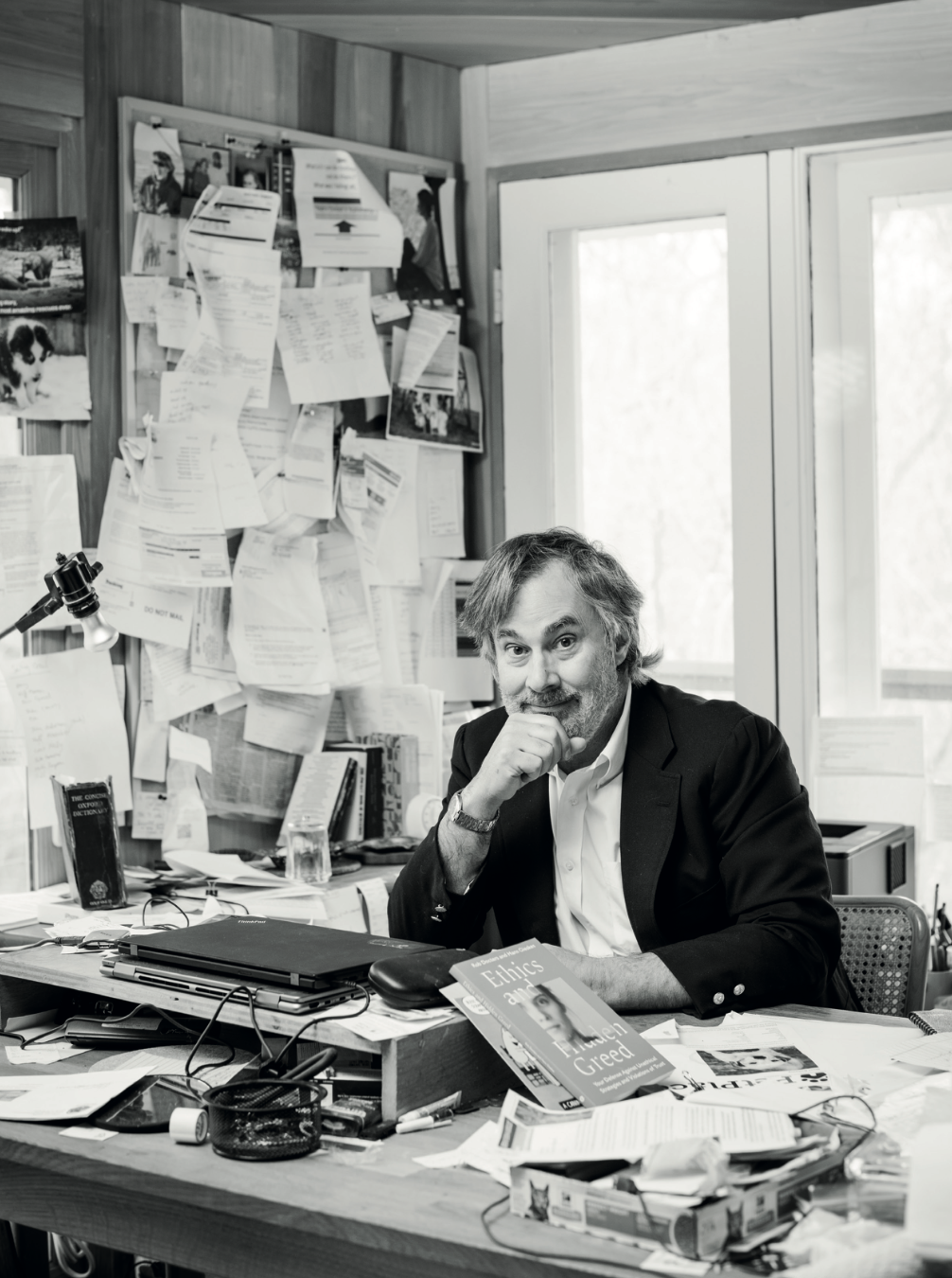
Robert Docters: ETHICS & HIDDEN GREED
New Canaanite Robert Docters is kind of a ‘mad genius’ - meant mostly in the sense that he’s someone so brilliant or unusual as to be capable of solving complex problems in unexpected ways. As an example, Docters’ newly-released third book, Ethics And Hidden Greed, examines the nature of ethics in the societal context of governments, companies, and consumers, and provides new perspectives and solutions on a range of ethical considerations. Everything about his academic and professional vitae screams that he’s off-the-charts intelligent. …And, while friendly and outgoing, he is a little bit odd.
Robert is 68. His parents moved the family to New Canaan in 1958 when Robert was a toddler, because his father worked for Mobil Oil which then had its headquarters in New York. Robert remembers his younger years here fondly, but Robert’s dad and the family were transferred to Switzerland and then to Germany, and during those years Robert attended the International School in Geneva and then the International School in Hamburg. In 1969, Robert’s dad was repatriated to headquarters, the family moved to Westport, and Robert went to high school at Staples.
Robert went on to Stanford University to study Economics and German Literature. “I really liked it there!” he declares. “I actually just met-up with three of my best friends at Stanford. …Stanford gave me the chance to think creatively. In economics, to understand the views of their favored Milton Friedman - and to explore every other theory and approach. I’m mostly a libertarian. …And because my parents were Dutch and French, and I started to speak German as a kid, studying German Literature fulfilled a kind of ancestral curiosity within me.
…At Stanford I started to think a lot about how we’re defined by what you own - and how I could be defined in some other way! …Although I do have to say that I was, and remain, the lone Beatles advocate amongst my Stanford friendgroup.”
Next, Robert earned a law degree from the College of William & Mary, and then an M.B.A. in 1984 from Columbia University.
He started working as a Principal in the commercial practice at Booz Allen Hamilton and, after being passed-over for partner, he moved to McKinsey, focusing mostly on pricing theory and practices. “In 2000, I started my own firm - called Abbey Road,” Robert says, referring again to his passion for the Beatles. “We built the firm up to a dozen people. We specialized in pricing and were involved in things like United States Postal System rate increases and setting rates and prices for everyone and everything from the Scripps Food Network to the Georgia Aquarium to New World Coca-Cola. …Society benefits from mutually beneficial transactions and is injured when either side in any transaction benefits disproportionately.”
“About five years ago I started to feel like I was fading physically, then I started to get dizzy and stuff, and then I had a seizure,” Robert recounts. “After seeing at least four neurologists who didn’t know what was wrong, I was diagnosed with Epilepsy. The doctors at Mt. Sinai told me I had some damage in the left side of my brain, and that it could be permanent, but that it should not get worse. I’m less active now, and can’t get out sailing too often. I have a ‘37 Nauticat called Lyrael - a Finnish sailboat - that mostly just sits at the Cedar Point Yacht Club waiting for days when I’m able to sail safely. …But, you know Julius Caesar had Epilepsy…and it didn’t kill him!”
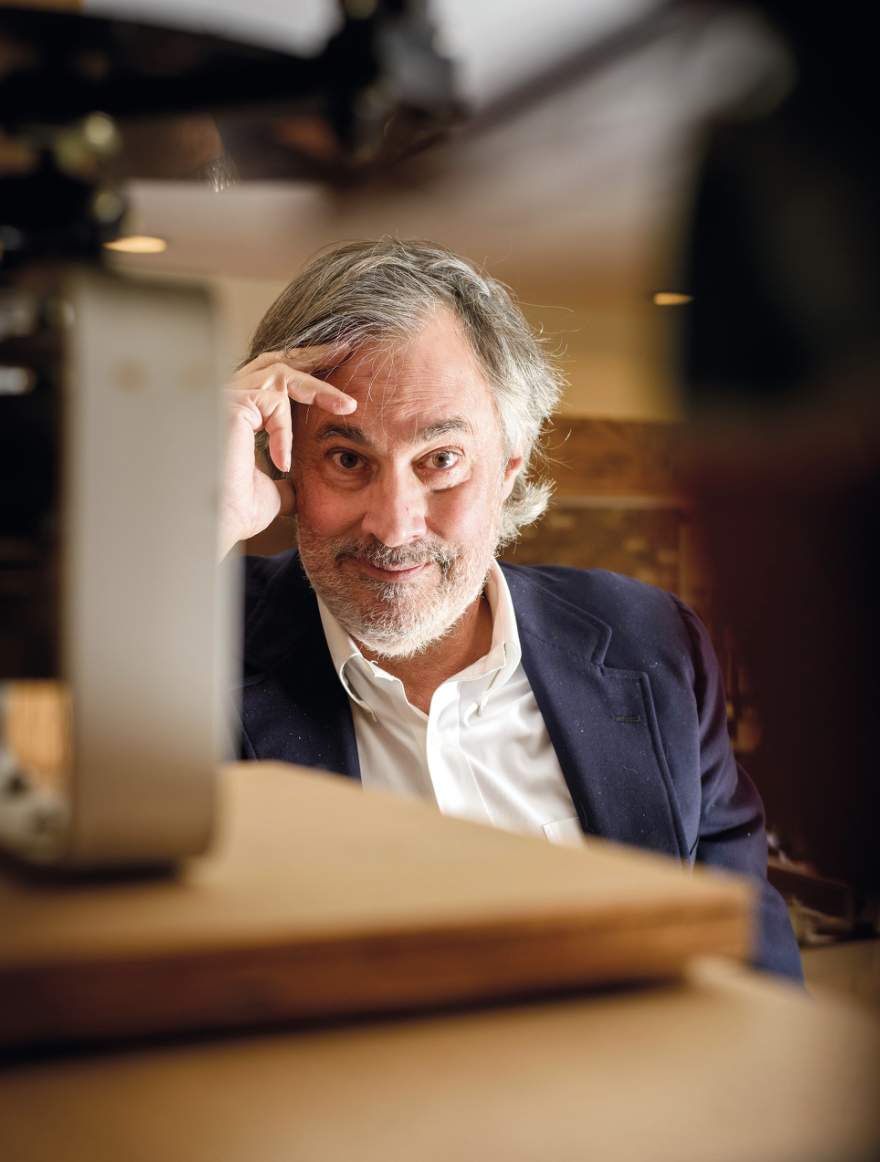
Ethics And Hidden Greed is deep and complex. Based in the ethical theory of the Cambridge Neoplatonist School as articulated by Professor Henry More, and influenced by Kant, the book is meant to “provide ethical prescriptions and frequently a strategy for recognizing and dealing with ethical issues.” …Sometimes even ethical issues not usually considered as such, like the gender discrimination involved in higher pricing for auto insurance for young males than females. The book examines how
“...labels on consumer goods, food and various packaged goods [have] been twisted so they are no longer accurate? What music are you allowed to reproduce, and why? How does one respond to assault by unethical people? How does a person remain ethical while defending against the unethical? What are the ethics in the world of artificial reality? What are the ethics of intergenerational conflict - a serious question when dealing with issues such as environmental calamity or college debt? What are legitimate societal ethical grievances? What serious ethical misdeeds are being ignored by society at this time?” As the book self-proclaims, “This book will help people recognize and defend against unethical actions.” And, “Unlike some books on ethics, this book will provide an answer to many (but far from all) ethical dilemmas.”
“We don’t have the time. Certain frauds will never be detected,” Robert jumps into discussing Ethics And Hidden Greed, always having a fresh perspective, and sometimes sounding anticonspiratorial. “I’ve met with a lot of CEOs and about two-thirds don’t want to hear it, but the third that listen have found that ethical behavior is actually more profitable. The real root of the problem is with the consumer. Egocentric selfishness is remarkably strong…and it’s counter-productive! People don’t understand moral or economic incentives, and fail to balance short-term versus long-term considerations. It’s counter-productive, and we can prove the benefit of making ethical choices.”
Robert co-authored Ethics And Hidden Greed together with Hans Gieskes, whose resume includes having been CEO of LexusNexus, Houghton Mifflin, Monster.com, and about a dozen other successful companies, whose chapter in the text about boardroom concerns analyzes some of the inherently conflicting interests confronting every Chairman, Boardmember, and CEO.
Robert’s first book, Winning the Profit Game, which was published by McGraw-Hill in 2004, focused on macro strategies for accumulating wealth. His second book, Contextual Pricing: The Death Of List Price And The New Market Reality, co-authored with John G. Hanson, Cecilia Nguyen, and Michael Barzelay, and published by McGraw Hill in 2012, focused exclusively on pricing, examining “...how buyers are influenced by comparison points and contextual messages more than by actual price levels,” and advising companies that a better approach to pricing will drive business revenues.
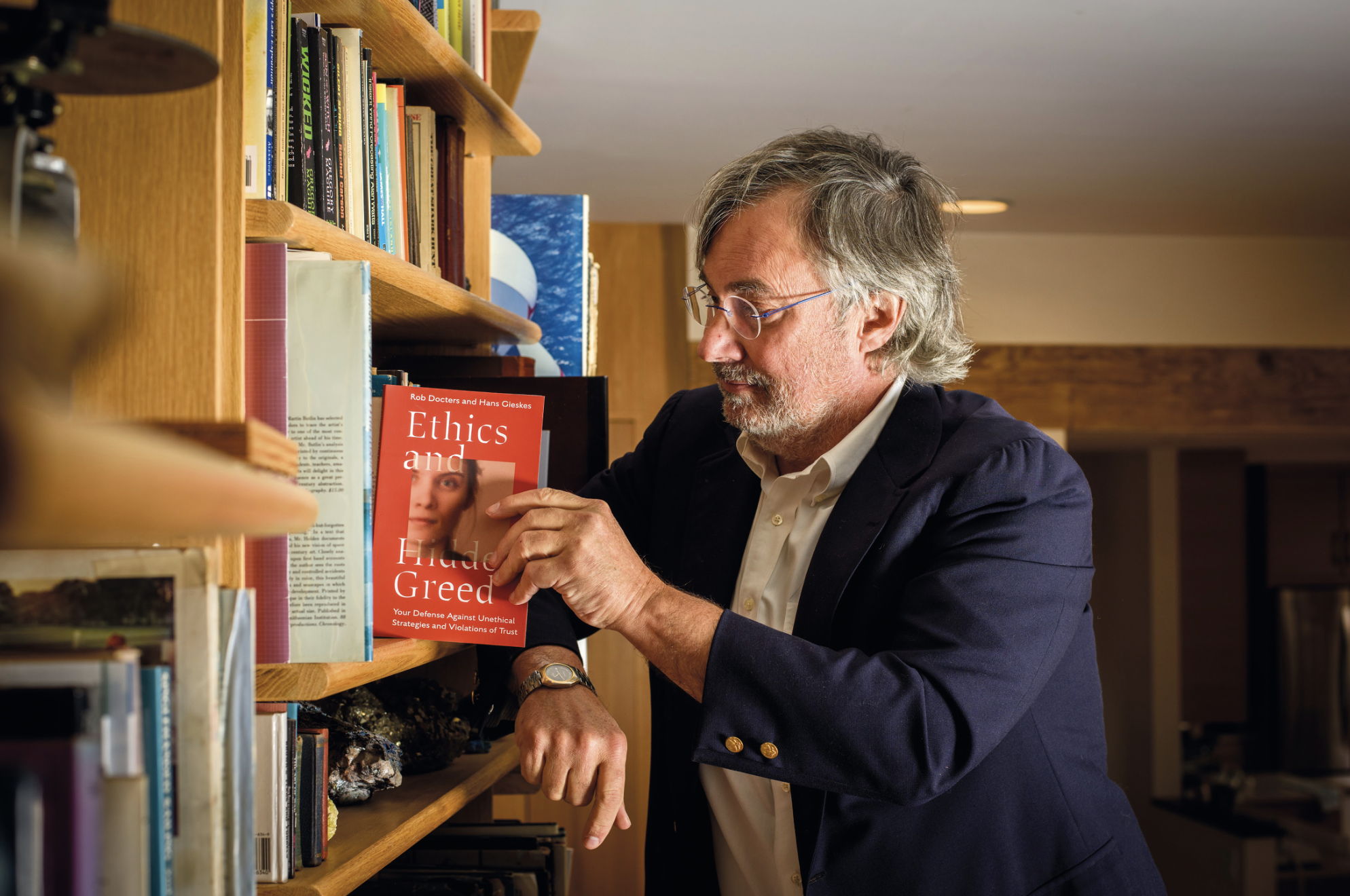
The range of Robert’s curiosity, questioning, and interest seems boundless. He’s interested in complex problems, like whether or not we as citizens do or should own intellectual property. He’s fluent in science, culture, technology, and politics - and does not shy away from letting you know where he stands. His analysis is educated, fact-based, logical, and well-organized. …And his takeaway often necessitates a new paradigm.
One issue which occupies Robert is the shortsighted nature of our government and society. “I’ll give you an allegory,” Robert says with a feeling of urgency. “When I was at Stanford, one of the dorms I lived in had a real problem with ants. Most of the other dorms had cockroaches, which we didn’t have, but the ants in my dorm were everywhere. One of my dormmates, who later became a senior domestic policy advisor to President George Bush, decided to take action and place ant poison all around the dorm - which effectively eliminated the ants in about two days. …A week later, we had cockroaches!”
Another societal question that Robert is focused on considering is who is entitled to what. …Robert’s view is that how a person grows up determines how that person answers that question, and that the only way we can even start getting to an equitable resolution of resource allocation is to understand the inherent interests of all involved.
“I’m not happy with the world and believe a whole lot of systemic and structural components of the way we do things needs improvement,” Robert laments.
“I’m hoping people who read Ethics And Hidden Greed learn to take a pause when they are decision-making to consider the ethical and reasonable way to both do the thing and achieve the objective.
…I believe we can change. …And that we’re each responsible for doing more! …Personally, I’ve given 17% of all the income I’ve earned since college to charity. My ex-wife was a fundraiser for Guiding Eyes For The Blind so we devoted a lot of attention to them, and I’m very involved with PETA, the International Fund For Animal Welfare, and Greenpeace, among other charities. There’s even a picture of my cat, Mr. Muffin, in the PETA headquarters in Norfolk, Virginia!”