The Onera Foundation
at 63 Park Street, New Canaan
Preserving American Architecture
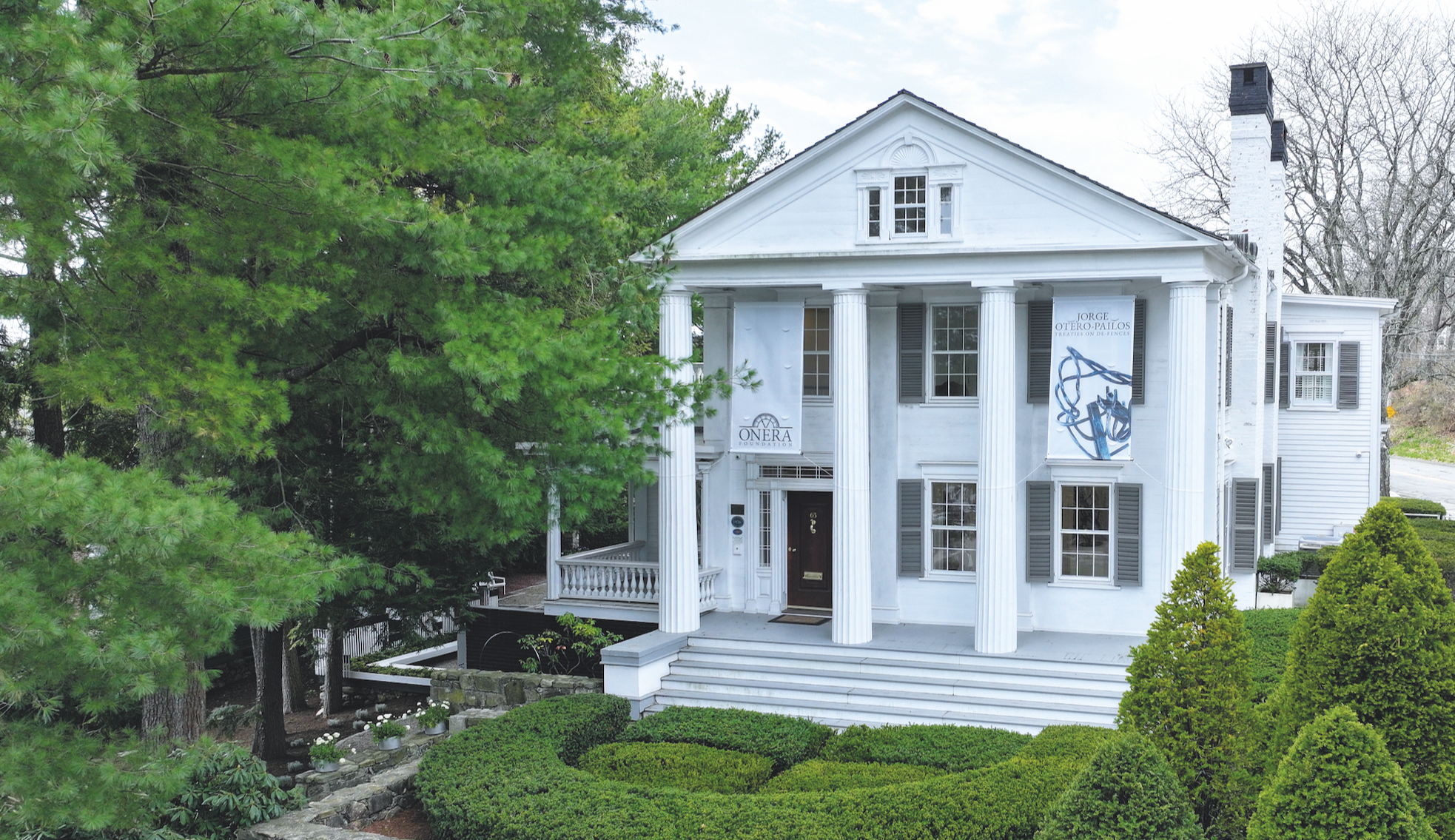
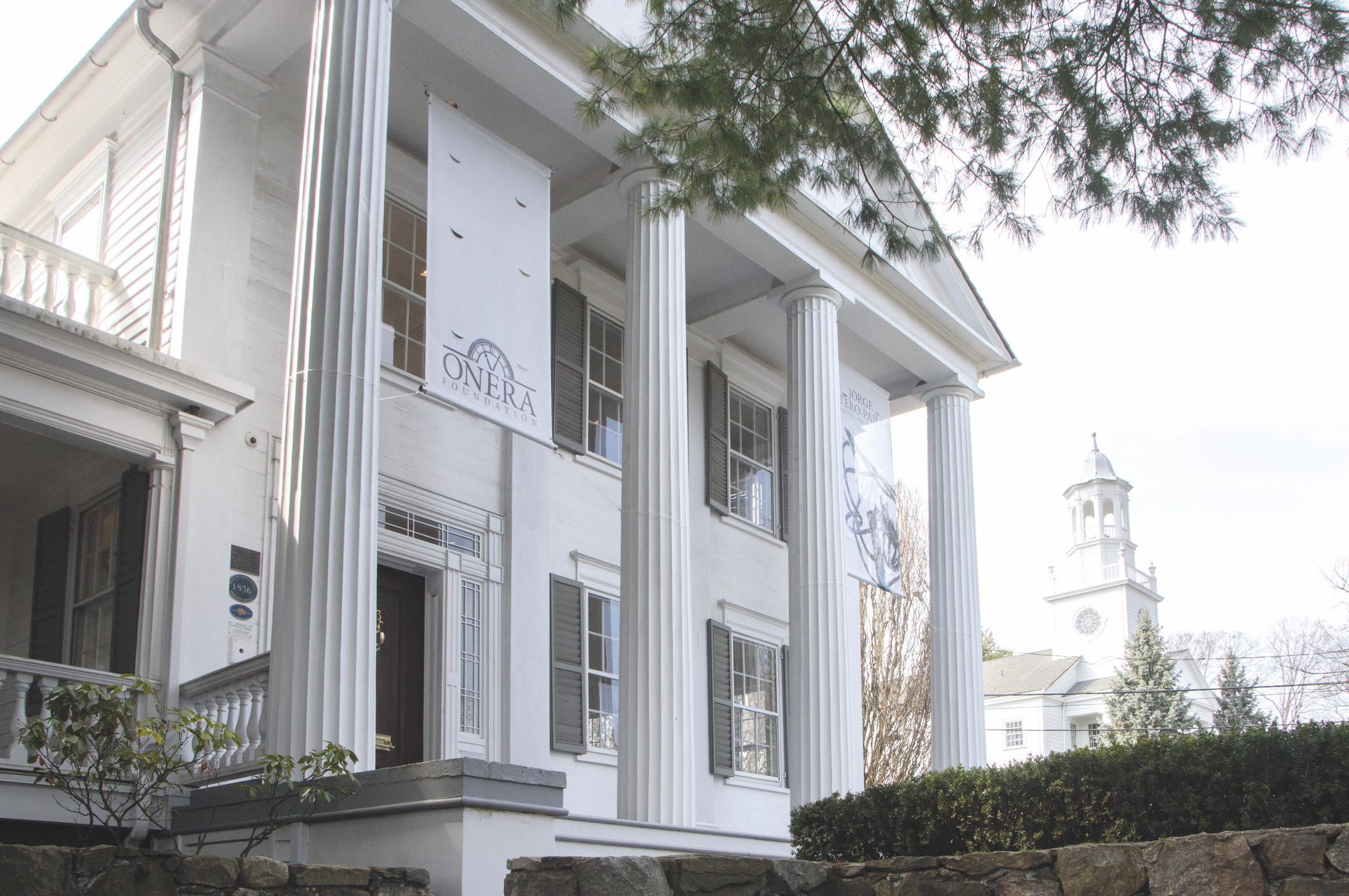
With no obvious fanfare or signage, passers-by must imagine that the stately white Greek Revival mansion at 63 Park Street in New Canaan houses some affluent family, or maybe the operations of a law firm or something like that…
…But, actually, an organization called the Onera Foundation has acquired 63 Park Street, and is now utilizing the property as a kind of gallery or museum designed in furtherance of Onera’s mission of preserving great American architecture.
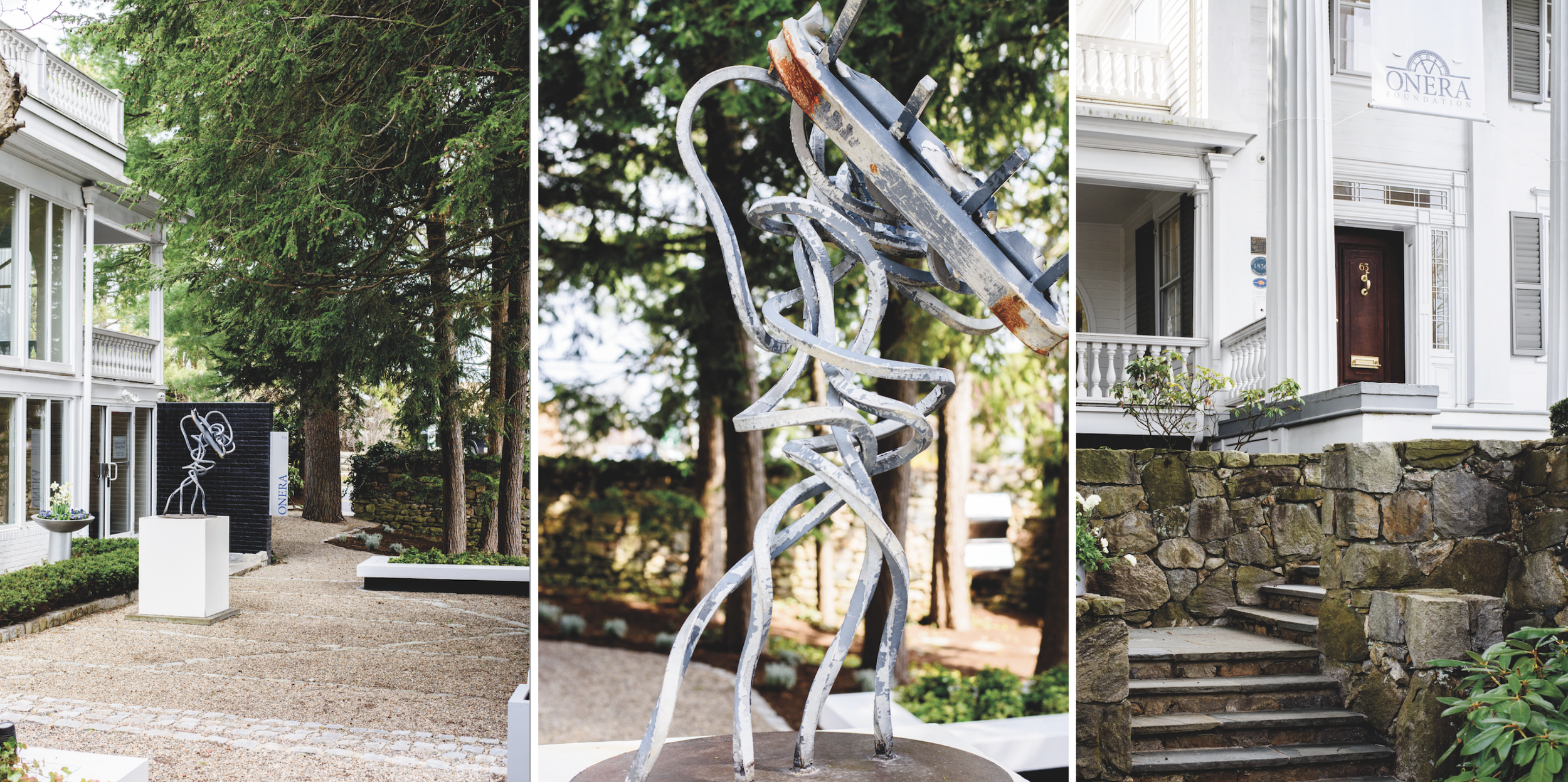
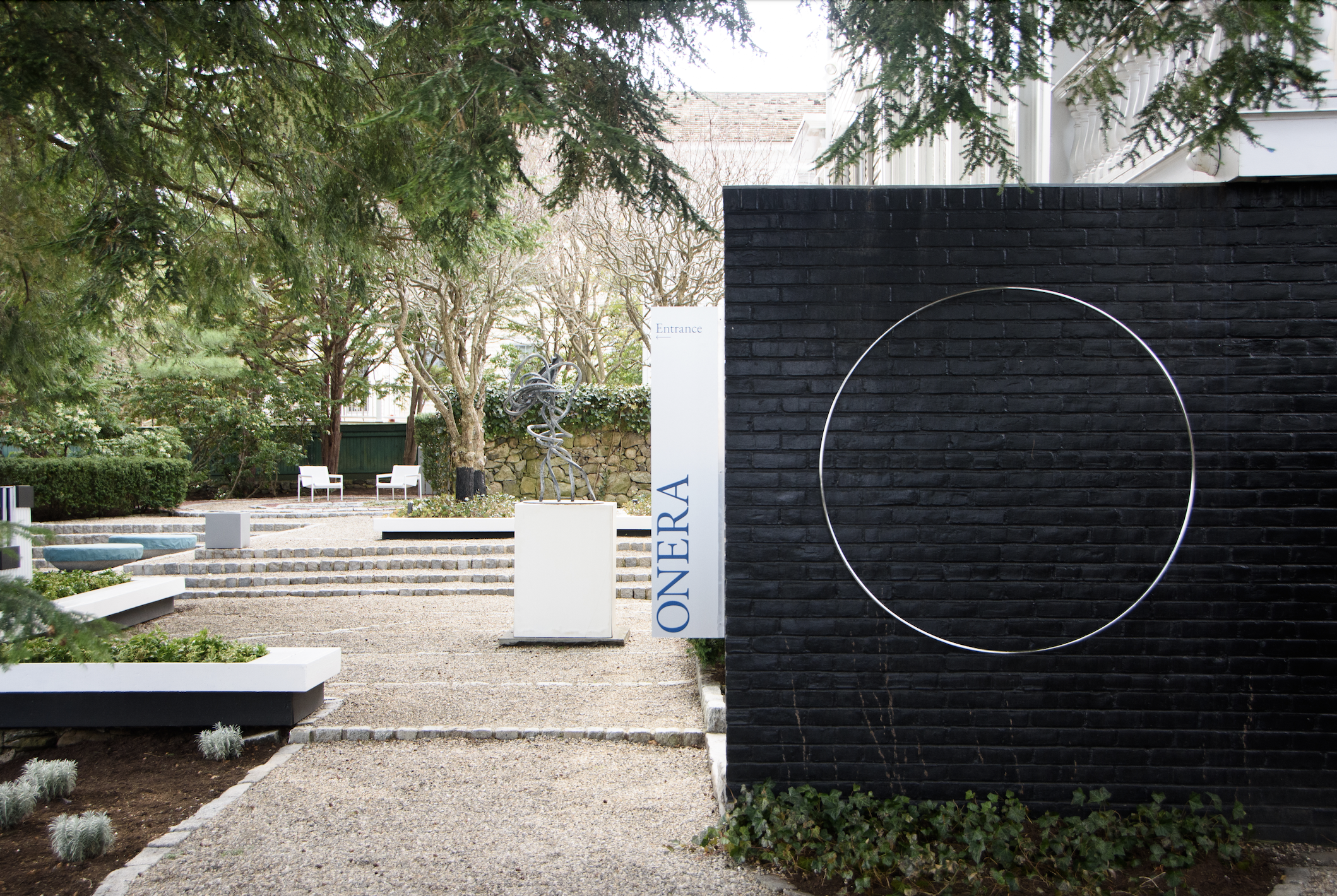
Onera became interested in 63 Park Street at least in part because the building itself has architectural significance. The original building was designed by the noted builder and carpenter, and Deacon of the local Congregational Church, Hiram Crissey, for the Fitch Family, and then changing hands from family to family until being sold in 1919 to become The Community School that was the predecessor to today’s The Country School of New Canaan. In 1924 the house was acquired by Maxwell Evarts ‘Max’ Perkins, who was an influential American book editor, best known for discovering and nurturing the talents of Ernest Hemingway, F. Scott Fitzgerald, Marjorie Kinnan Rawlings, and Thomas Wolfe. Later falling into disrepair and being used as four separate residential apartments, the house was acquired in 1973 by the noted landscape architect Richard Bergmann and his wife, Sandra Bergmann, who transformed it into a combined private residence and architectural office, and designed a garden featuring stepped terraces and modernist design elements. A prolific sculptor and photographer, Bergmann created stainless steel sculptures, some of which remain installed in the garden. Inside the house, original period woodwork was painstakingly restored. The award-winning restoration and garden design gained widespread recognition as a successful case of adaptive reuse and, under the Bergmanns’ stewardship, the house was designated Connecticut’s first Literary Landmark in 2002, added to the National Register of Historic Places in 2004, and the gardens were included in the Smithsonian’s Archives of American Gardens.
The opportunity to have the Foundation’s headquarters and showcase in the architecturally notable town of New Canaan was another strong attraction to 63 Park for Onera. New Canaan’s key role in the ‘Harvard Five’s’ mid-century modernist movement ties right into Onera’s mission and message.
…And 63 Park Street’s location only steps away from the New Canaan Train Station - facilitating easy transportation from New York for guests and visitors - made buying the building seem obvious.
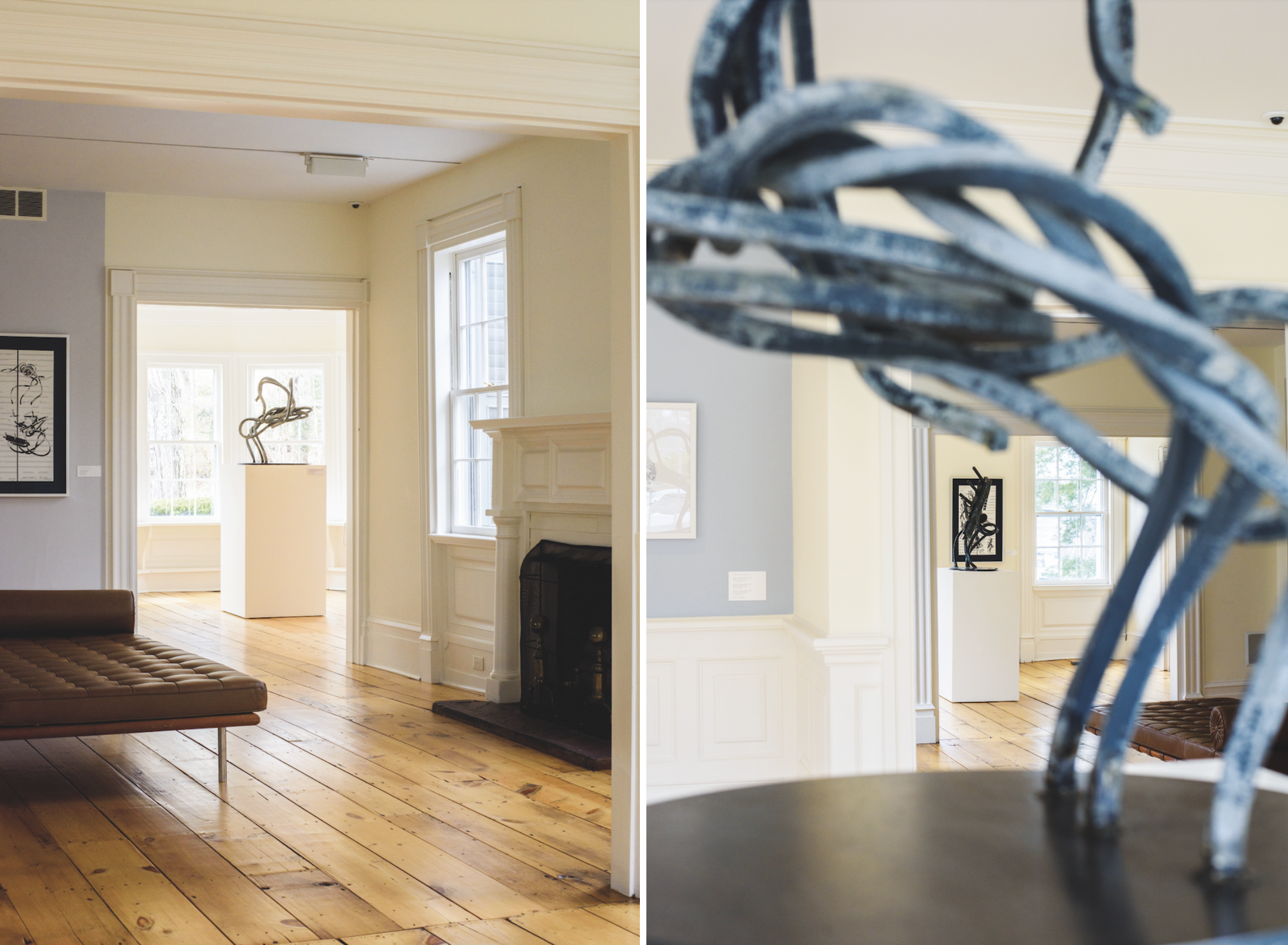
The Onera Foundation acquired the property in 2018 and has transformed the former architectural office into a first-class art exhibition venue. Spanning two floors linked by a dramatic floating staircase, the space was designed to accommodate museum-quality exhibitions while meeting ADA accessibility standards. Throughout the renovation, Onera prioritized the careful revealing, preservation, and creative reuse of the home’s historic fabric. Notably, the original 19th-century white oak plank flooring was uncovered and meticulously restored, with surplus boards thoughtfully repurposed in the upstairs rooms and rear staircase.
Laurence Lafforgue is the Onera Foundation’s Executive Director. Prior to joining Onera, she’d devoted the last two decades of her career to consulting arts and culture enterprises, including the National Gallery of Art, on their transition to a digital presence, and on finding new and innovative ways to communicate with their audiences. Laurence sets out, “The Onera Foundation is dedicated to preserving significant American architecture. We seek to educate and advocate, and to make the whole approach of historic preservation more prominent and more accessible.”
“One of our functions as a foundation is grant-giving,” Laurence explains. “We fund the annual Onera Prize, an annual prize that supports students graduating from the Historic Preservation Program at Columbia University Graduate School of Architecture Planning and Preservation to test new preservation theories and technologies in practice. As an example, last year’s Onera Prize recipient, Anne Maxwell Foster, is presently working on a project to demonstrate the efficacy of historic window awnings for use as an element in passive cooling plans for modern-day climate mitigation strategies. Anne presented her project to a packed house at 63 Park in April.”
“And we host frequent talks, symposiums, and seminars relevant to architectural preservation…and our programs are offered on a first-come first-served basis and many are absolutely free,” Laurence continues. “As an example, we recently hosted a discussion titled America at Home - The Architecture and Politics of the U.S. Embassy in Dublin, which was designed by John Johansen, and is slated to be decommissioned, and has a yet undetermined future. And we were honored to have had the Irish architect and scholar Cormac Murray, the eminent photographer of American architecture Norman McGrath, and the architect Christen Johansen, who is John Johansen’s son, participate on that panel.”
“We currently have two major installations on display at 63 Park,” Laurence introduces Onera’s impressive opening exhibits.
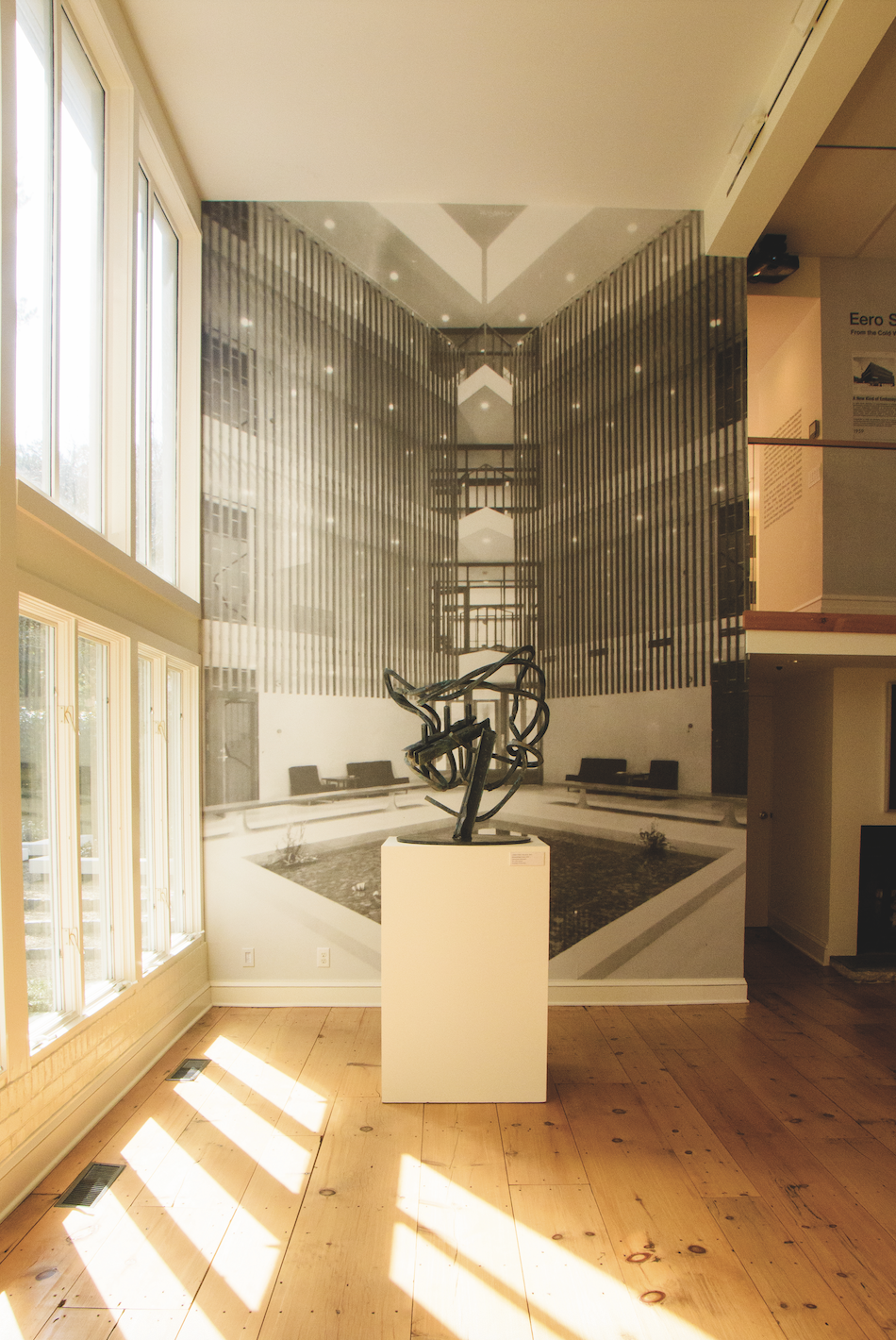
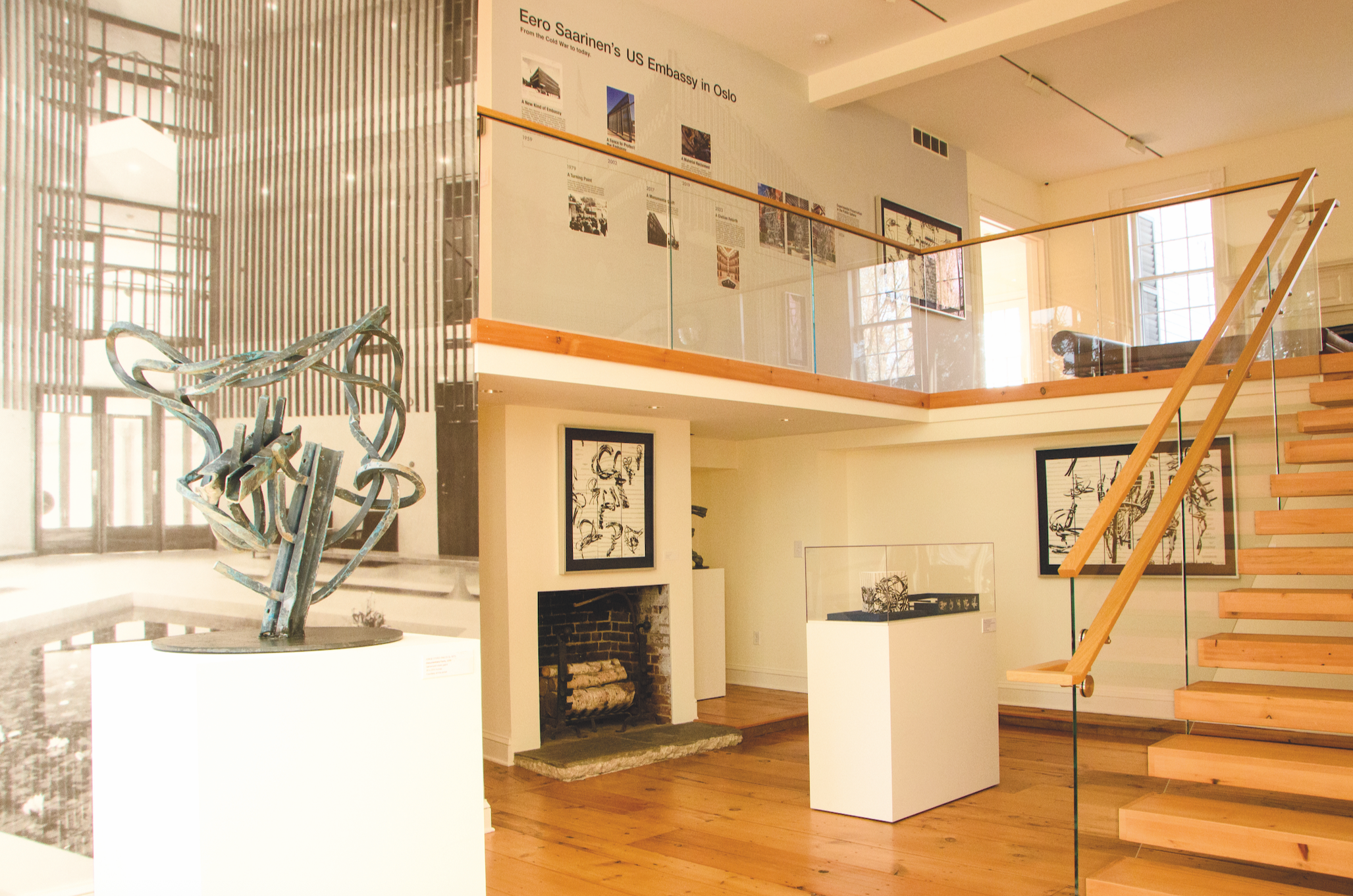
“The first exhibit, which came to us from the National Museum of American Diplomacy and is now located in the two-floor atrium and aside the soaring staircase leading up to the grand gallery, is titled Treaties on De-Fences. This exhibit is most specifically focused on the decommissioning of the architect Eero Saarinen’s U.S. Embassy in Oslo, which was built in 1959 and sold by the U.S. to become a private office building in 2017. Treaties on De-Fences features the work of the artist Jorge Otero-Pailos, who is well known for his large sculptural work, which brings together the worlds of contemporary art and architectural preservation. The exhibit includes several giant, twisted, and rusted steel beams - which once served as a part of the security fence that once surrounded and protected the Embassy, and thereby defined the American presence. Jorge has a special passion for turning remnants and rubble into art, always with the purpose of getting the audience to take a fresh look at architecture.” Laurence has some special insight into Jorge’s artistry…as he’s also her husband.
“The second exhibit, titled The Cold War Era U.S. Embassy Program & Modern New Canaan, broadly explores the decommissioning of the U.S. Embassies constructed during the period from 1948 to 1964. During the Cold War, the U.S. State Department hired leading architects to design U.S. Embassies around the world that would promote cultural diplomacy by being open and welcoming to the public, at the same time as they would project ‘soft power’ and help to deter the perceived spread of Communism and threat of the Soviet Union. These Embassies included John Johansen’s Dublin Embassy, Edward Durrell Stone’s New Delhi Embassy, Josep Liuis Sert’s Baghdad Embassy, Walter Gropius’s Athens Embassy, Eero Saarinen’s Oslo and London Embassies, and Marcel Breuer’s U.S. Embassy to The Hague.”
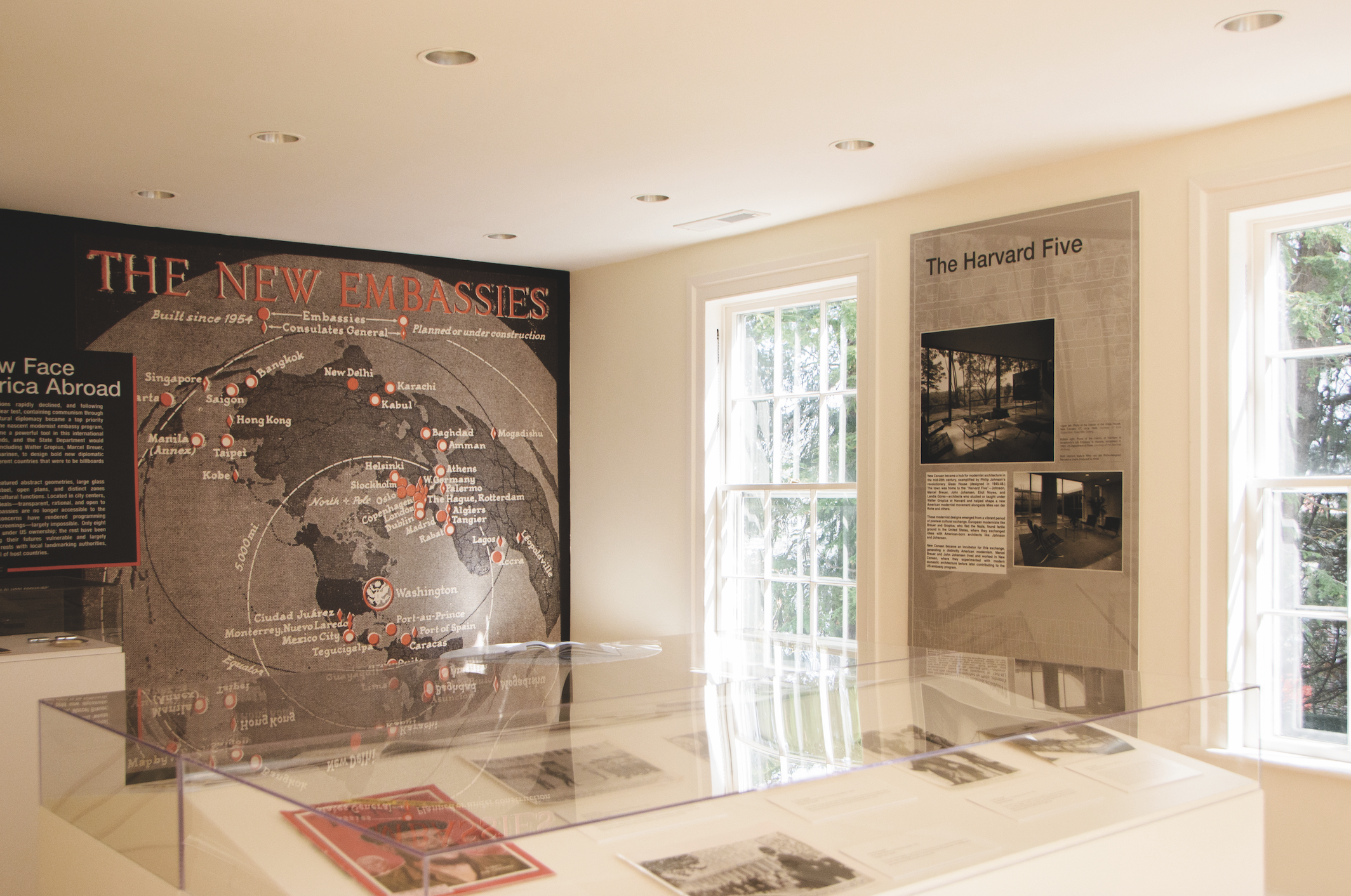
“This exhibit also features the Mid-Century Modern houses built in New Canaan by the Harvard 5 and some other notable modernist architects,” Laurence guides. “This exhibit features the documentary film titled The Harvard 5: A Story of Love, Architecture, and a Design Revolution, produced by New Canaanite Devon Chivvis and released in 2025, and the multi-media presentation includes excerpts from the film. The Onera Foundation helped to fund Chivvis’ completion of the movie after years of her dedicated research, interviews, writing, and production, and we’re particularly thrilled with the way she stressed the importance of the people who have inhabited and preserved the great Mid-Century masterpieces that are some of the crown jewels of our community. Our collaboration with Devon is a perfect example of how Onera wants to support artists who use their talents to help foster architectural preservation.”
“And I’m excited to announce that on July 1 - marking the 250th anniversary of the Declaration of Independence and the 40th anniversary of the founding of the Foundation for Art and Preservation in Embassies - we will be opening a new is exhibition, titled AMERICA ABROAD: Art, Architecture, and Diplomacy – Works from the FAPE Collection. This exhibition explores how art and architecture have shaped the U.S. diplomatic presence abroad - from the Cold War to today, and features leading American artists including Ed Ruscha, Robert Rauschenberg, Carrie Mae Weems, Julie Mehretu, and Martin Puryear, as well as a replica of the 1823 William J. Stone Engraving of the Declaration of Independence, which was gifted by David M. Rubenstein to each U.S. Embassy.”
“The Onera Foundation is committed to finding new and innovative ways to promote the mission of preserving significant American architecture,” Laurence proclaims. “And while we don’t solicit funding, I’m always interested in finding a few more docents interested in introducing 63 Park and Onera to our visitors.”
North Salemite David B. Peterson is the Founder and President of the Onera Foundation.
Though he shies away from publicity, wanting all attention to be paid to Onera, he’s become an undeniable and recognized expert and leader in the field of architectural preservation. He’s an intellectual and a polymath, and a chef and a man about town, whose interest in preserving American architecture is just one of several of his life’s passions.
…In 2016, harking back to his lifelong interest in architecture, David returned to school at Columbia University’s Graduate School of Architecture, Planning and Preservation to earn a Masters in Historic Preservation. David’s award-winning book, US Embassies of the Cold War: The Architecture of Democracy, Diplomacy and Defense, published in 2023, featuring the fourteen most significant midcentury modern American Embassies built during the Cold War, was an evolution of his Masters Thesis…and was the genesis of what has now taken shape as the Onera Foundation.
David is the middle of five children of Pete Peterson, who was the Secretary of Commerce under President Nixon and the Founder of the financial behemoth Blackstone, and so David grew up - for a couple of years in Washington D.C. and then on the Upper East Side of Manhattan - with exposure to the highest level of American politics and society. “My parents had strong social values and taught the importance of equal housing and the benefits of quality education for all.”
David is currently an Adjunct Professor at his alma mater the Columbia University Graduate School of Architecture, Planning and Preservation. In addition, he serves on the Advisory Council of the Glass House, a National Trust Historic Site in New Canaan, and as a Board Member of The Foundation for Art and Preservation in Embassies, a public-private partnership with the U.S. State Department dedicated to providing permanent works of American art for U.S. Embassies worldwide.
He’s also a longtime Board Chair of the Harlem Academy, a 22-year-old independent New York City charter school located at St. Nicolas Avenue and 145th Street in Manhattan, offering promising students a leading education regardless of economic circumstance - with 225 youngsters currently enrolled.
David went to Dalton for high school and then to Dartmouth College, where he majored in English. When he graduated in 1981, he took a job as a Risk Arbitrageur working for a former Chairman of the New York Stock Exchange and also earned an MBA from New York University. He then worked as an Investment Banker, with tenures at Salomon Brothers, Citibank, and Rothschild.
“Preserving great architecture is a relatively new focus in America,” David expounds. “The modern movement for historic preservation really got started in 1964, when they knocked-down
the spectacular Beaux-Arts Penn Station in Manhattan. And, coincidentally, that same year Columbia University started the country’s first graduate Historic Preservation program. Other countries, particularly in Europe, have a long and dedicated record of support for historic preservation. We hope, with the Onera Foundation, to focus on the importance of historic preservation and America’s significant architecture with creative programming and support for academic research. Architecture is somewhat challenged by its scale – you can’t really put a building in a museum, the way you can with paintings, sculptures and historic artifacts. …After all, and perhaps most important, isn’t America’s great architecture worth supporting the way we do for other national treasures?”