Steve Zatz’s Native Meadow
Wild thing...You Make My Heart Sing!
The song may be about something else, but it’s exactly the way New Canaanite Steve Zatz feels about the two-and-a-half acres of native meadow plants he’s cultivated in his backyard!
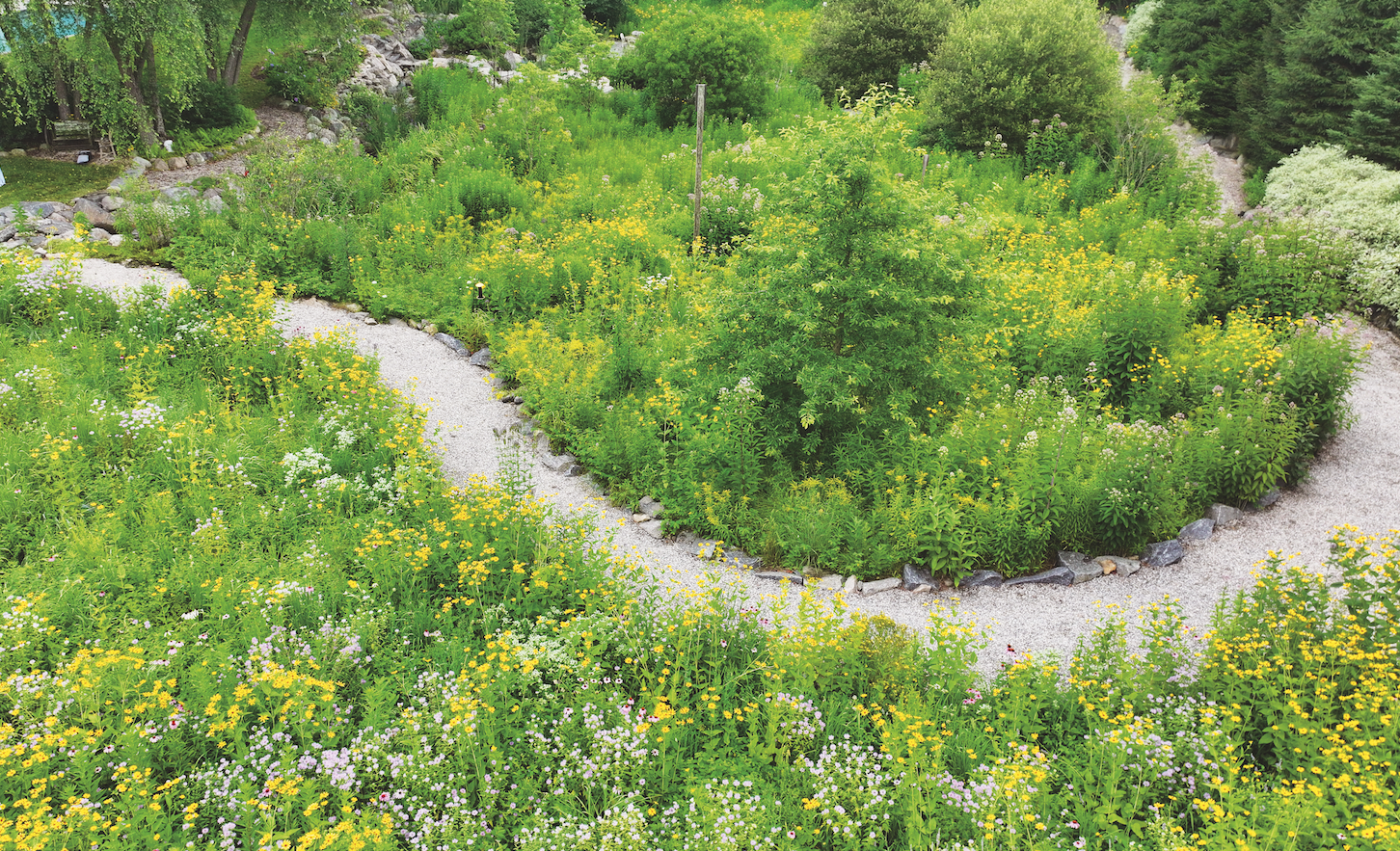
“When we bought this house, we didn’t realize what a major undertaking the backyard would be,” Steve admits, “...and when we moved in, in January 2017, the yard was covered in snow. My wife Deborah had a vague notion about creating a pond, but we didn’t really know what we were doing with any of it. When the snow cleared and spring came around, we realized the backyard was a horror show! It was a swamp, with stumps and deep layers of invasive vines all over the place. We started referring to it as the Slough of Despond. One of my neighbors is the renowned architect Dinyar Wadia, so I asked him to assess the situation, and when he came over all he had to say was ‘It’s a disaster!’. The property is located just east of Oenoke Ridge and, particularly after heavy rains, water would drain into our backyard. We started to do a little clearing to see what was going on - until the Inland Wetlands Commission educated us on their requirements for doing work in wetlands. Fines paid, we hired Keith Simpson and Andrew Loglisci to make sure everything we did was compliant and to manage the project, and we really got to work cleaning it up. In the middle of the lowest point in the yard, under layers and layers of brush and dirt, we discovered a ‘farmer’s drain’. It must have been constructed in the 19th century and probably runs underground to Five Mile River, but the underground pipes were choked with mud. Once the top was clear and the pipes were cleaned, it consumed whatever water came into it. Andrew is an engineer by training and, working with Nick Cambareri, they constructed underground conduits to carry all the natural flow directly to the now-functioning farmer’s drain, via a lovely winding stream with multiple little waterfalls. ...And the swamp that was the backyard was no more!”
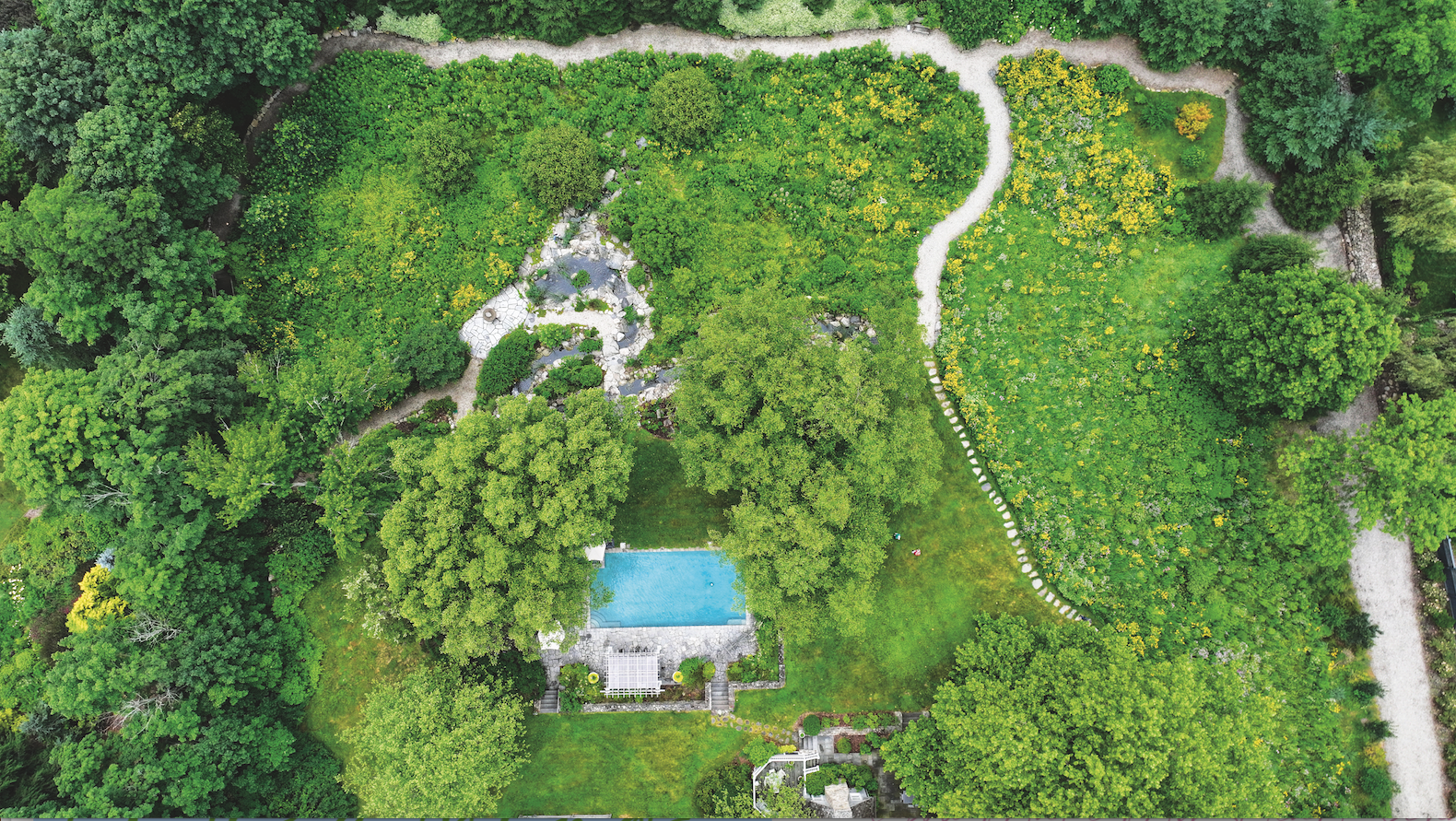
“With the water situation under control, we decided to turn the backyard into a native meadow instead of a lawn,” Steve recalls. “I figured I would still have plenty of lawn in front of the house and, environmentally speaking, grass is essentially a bio-desert. I was interested and challenged by what we could create, and I really didn’t have very high expectations. We had to build a gravel access road skirting the wetlands to truck-in the three hundred tons of rock we used to shape the meadow and give form to the meandering stream and walking paths, as well the three dozen or so trees we planted. Keith Simpson designed the basic planting plan and an elevated wooden boardwalk to bridge a particularly wet section of the path. At that stage, we focused on what plants would do well in wet conditions, what would thrive in the shaded areas, and what would keep it visually interesting for as much of the year as possible. We planted the backyard in two sections which we refer to as the Pond Meadow and the Fox Meadow, and then decided to add the side yard, the Maple Meadow, as a third piece of the jigsaw. We get a lot of questions about whether the stream and pond breed mosquitoes…We’ve found that the mosquitoes are well managed by the abundance of dragonflies, tadpoles, frogs, toads, and bats.”
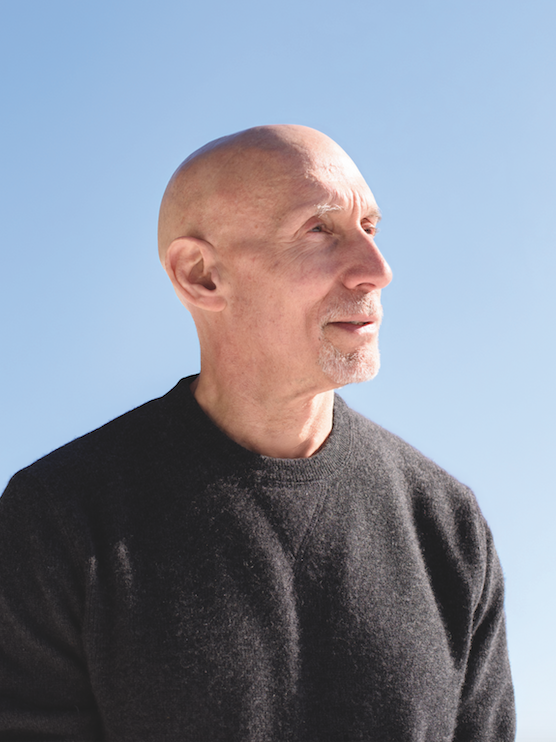
Steve is a fascinating guy. He grew up in Bound Brook, New Jersey, went to Yale, then to Stanford to become a physicist - until being dissuaded from that pursuit by a professor telling him that any good physicist could rebuild a car engine, which Steve knew he could not. So he decided to become a doctor, went to Cornell Medical College, did his residency in Internal Medicine at Brigham and Women’s Hospital in Boston, then accepted a Robert Wood Johnson fellowship to earn an MBA at University of Pennsylvania’s Wharton School. When, in 1989, he decided being a practicing doctor wasn’t for him, he turned to a career in the field of digital health information. After ten years working in several successful healthcare ventures, Steve began a twenty-year tenure at WebMD, becoming President and eventually CEO. He has since followed that up with executive roles at other companies. He also serves, locally, as a Member of the Waveny Park Conservancy Board.
“Deborah and I moved here from Westport with little understanding of why native species were important. The short answer is because non-native plantings generally don’t support native insects and birds, which are definitely under threat. Having learned that, we had to decide exactly what to plant,” Steve describes. “I knew I wanted classic and native plants for a Northeastern meadow, and consulted with Keith and later Teresa Mucci about what to plant in various locations. My personal favorites are the Ironweed and Joe Pye for their color, and Milkweeds for their support of Monarch Butterflies. We also have an abundance of Wild Bergamot, Echinacea, Vervain, Mountain Mint, Foxglove, Ohio Spiderwort, Boneset, Mountain Laurel, Witch Hazel, Ferns - in Sensitive, Christmas, and Hay-Scented varieties, Summersweet - for its fragrance, Elderberries, Blueberries and numerous Aster varieties that come in as all the summer blooms fade.”
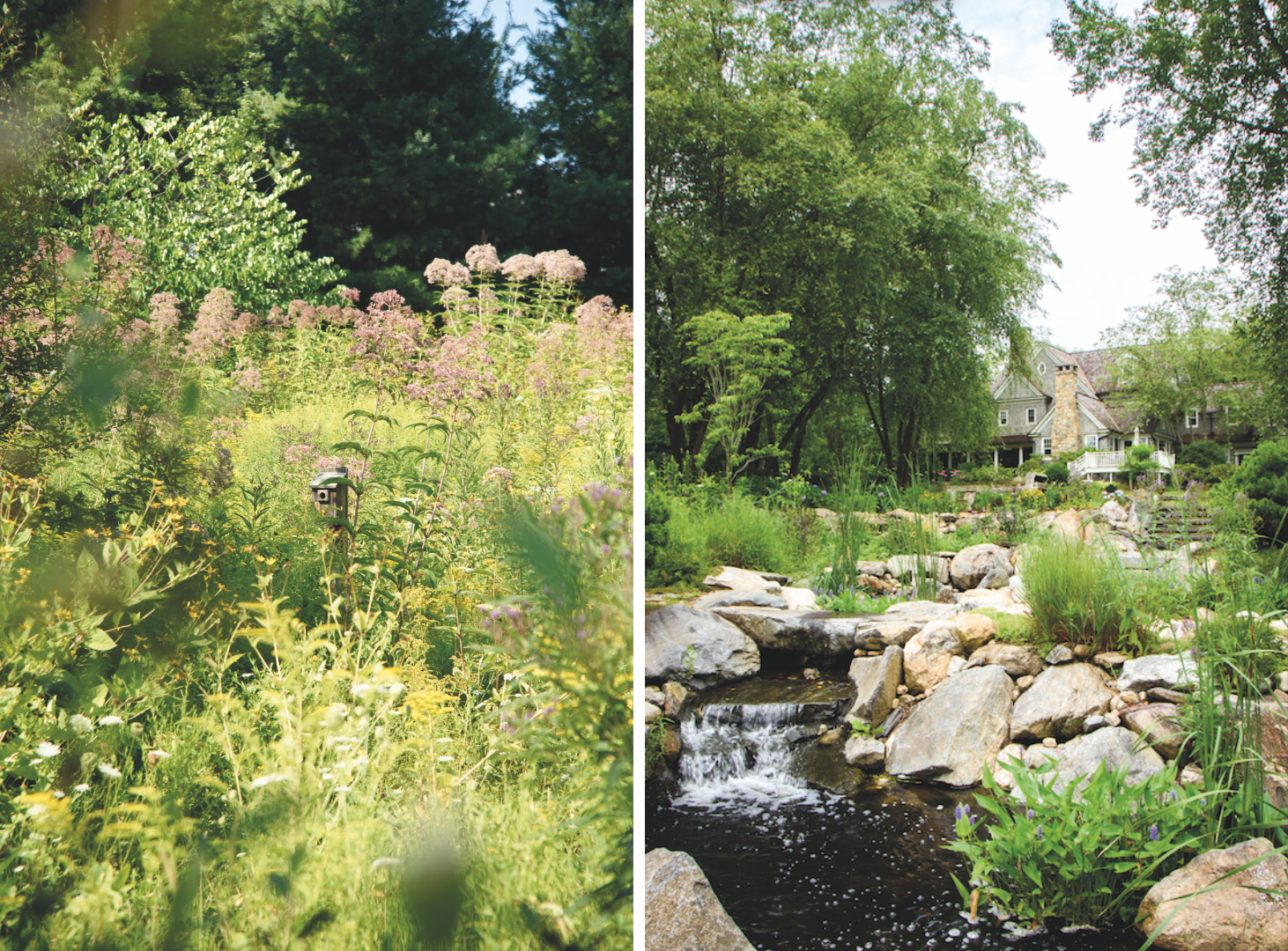
“In the stream itself we’ve removed non-native Irises to make room for native Pickerel Rush, Sweet Flag, and Blue Flag. When you place plants where they want to be, they tend to do very well. Even the most desirable native plants, however, can become ‘over-achievers’, requiring management so they don’t crowd out healthy diversity. Sometimes the different meadows share plants with each other and things show up in one that were never planted there. We add additional plantings each year, and now have about a hundred species of wild flora. This year we’ve also planted an orchard with Apple, Peach, Pear, and Plum trees. And project begets project, so next year we’re planning to build an elevated viewing platform so we can climb-up and survey the early summer firefly show from above. Local ‘Firefly King’ Bill McDonald has been a constant inspiration to our work here.”
“I don’t want to think about what our construction cost us, but in most cases I think the costs of installing and maintaining a lawn or planting a meadow are comparable,” Steve says. “There’s a war going on every day in a meadow - the plants you want versus the invasive species. I have help from a team from German Navarro’s company who have a great deal of experience maintaining meadows. Unlike lawn mowing, a fair amount of the meadow work is done by hand, removing invasive plants and cutting down the meadow annually. I like working in the meadow myself. It makes me feel connected to nature. It’s kind of meditative and quite enjoyable to be out involved in the natural beauty.”
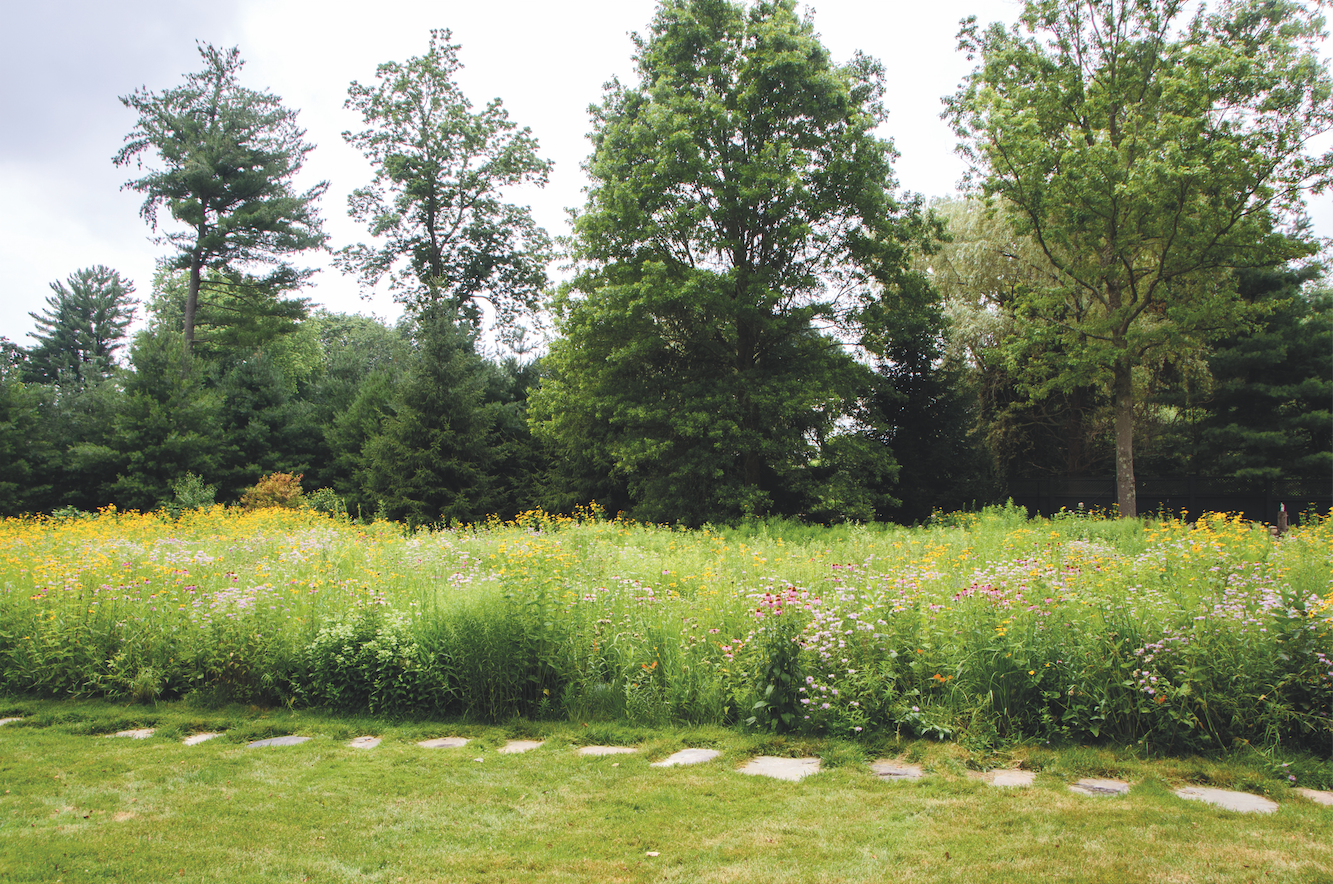
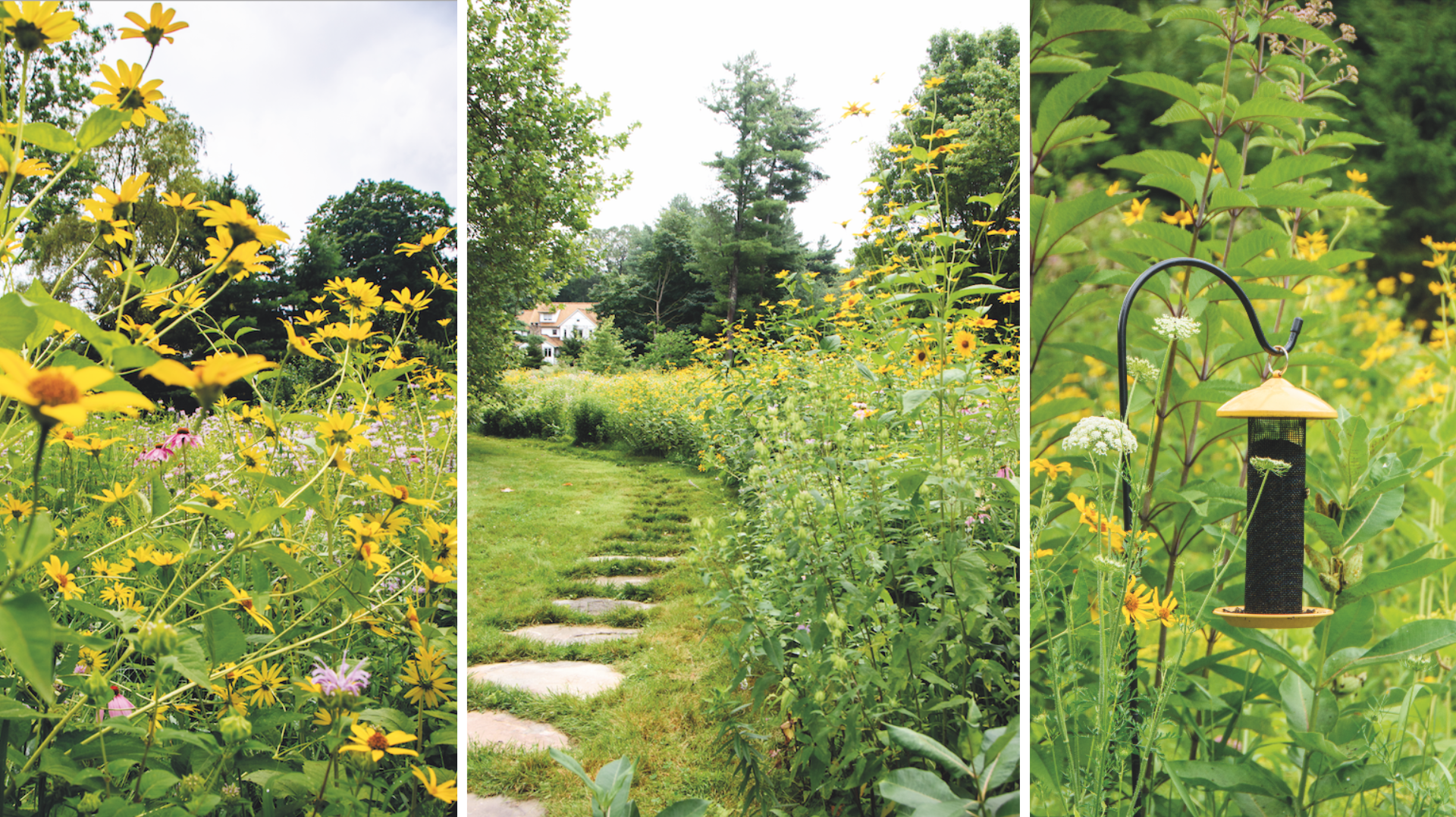
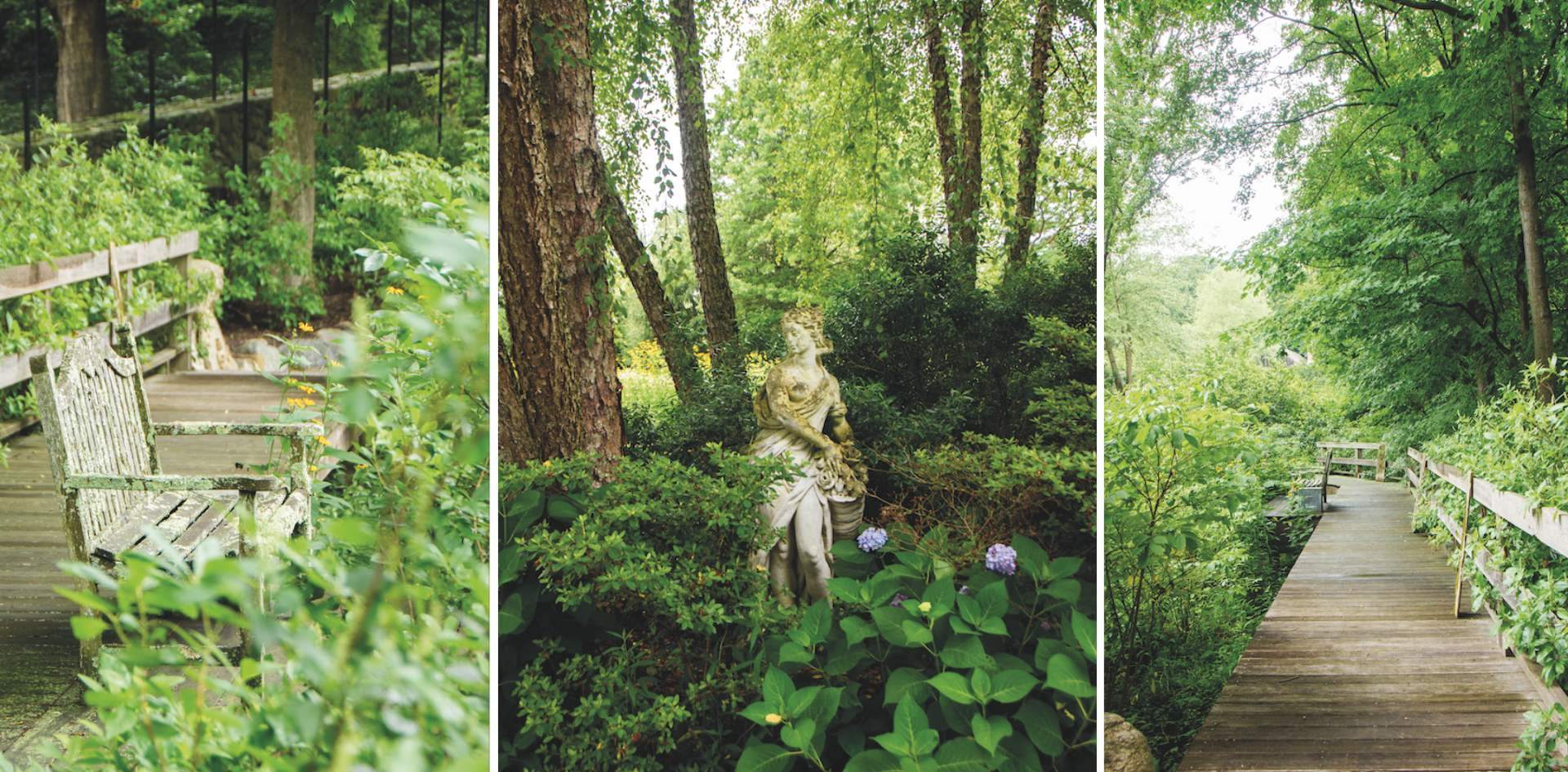
“It’s unbelievable how the entire meadow goes from nothing to beautiful as winter turns to spring!” Steve proclaims. “It gets cut to the ground only once, in March, after all the wildlife has finished using it for the winter. Once it comes to life again, every day is a different picture. I love walking all the paths, really taking in nature, listening to the water bubbling, and enjoying the sculpture and follies we’ve positioned everywhere. Usually I choose and site the plantings while Deborah finds the statuary, then we decide together where the decorative items should go. We have a wide variety of animal statues, mostly following two guidelines - they’re roughly life-sized, and they’re naturalistic renderings of local species. So for example we have lots of frogs but no card-playing frogs, and we have no lions or elephants. I often sit outside and work on the phone or on my laptop, looking out on the Pond Meadow. It’s the best office in the world!”
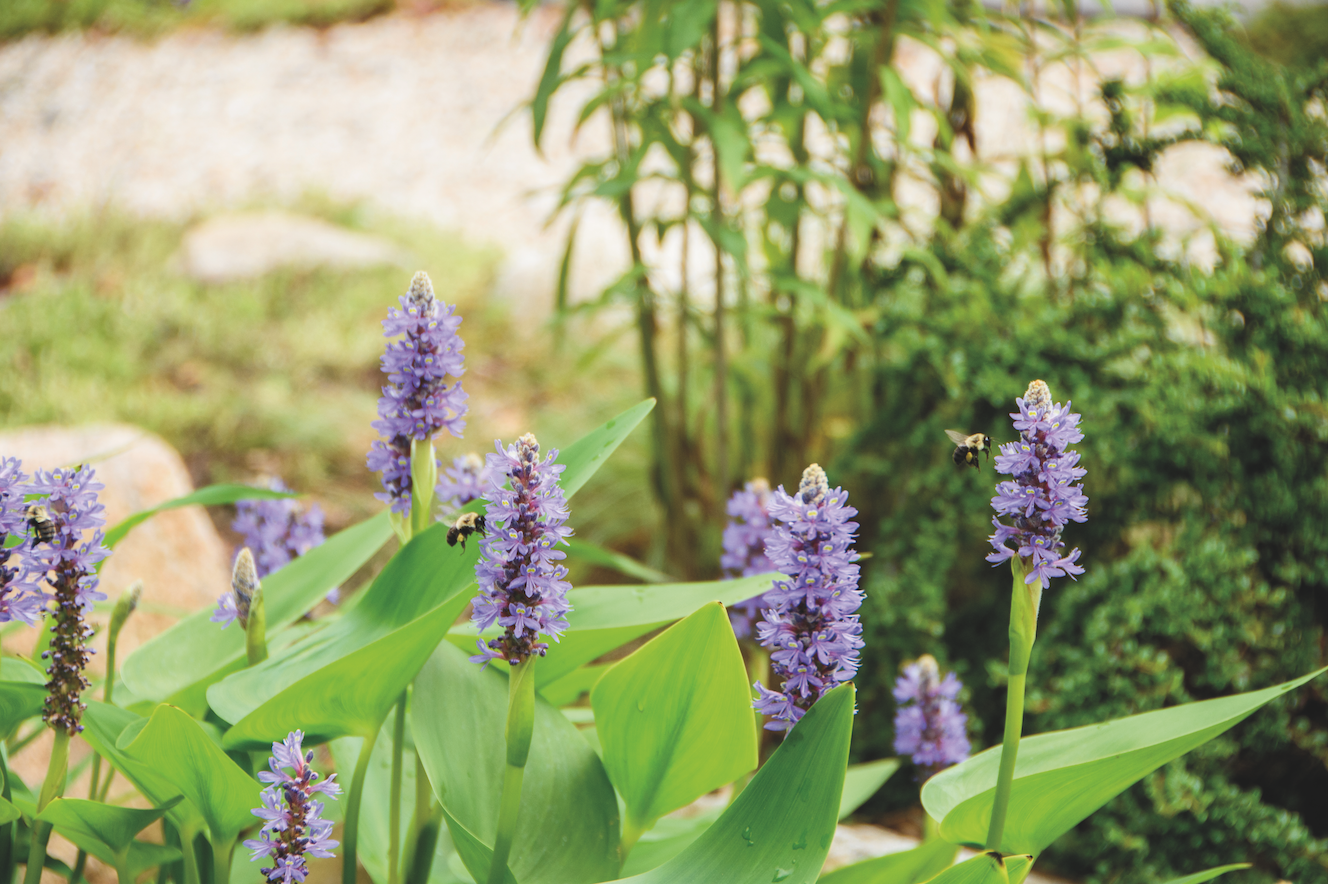
“The wildlife we get to enjoy is an added bonus,” Steve smiles. “We have rabbits, coyotes, raccoons, foxes, and the occasional bobcat. The birds are absolutely spectacular! In the insect world, the Monarchs love the Milkweed and the fireflies love the freedom from insecticides and artificial lighting. And I’m quite sure all the bees in the neighborhood, including the Honeybees from hives in the Land Trust’s Hannum-Eberstadt Meadow on Smith Ridge Road, love the biodiversity our wildflowers provide. A lawn is a monoculture, but we have to provide biodiversity for our ecosystem to survive.”
Like a Johnny Appleseed for wilding backyards, Steve declares, “You don’t need a big project like this to introduce some natives to your landscape. Everyone should at least try a patch!”