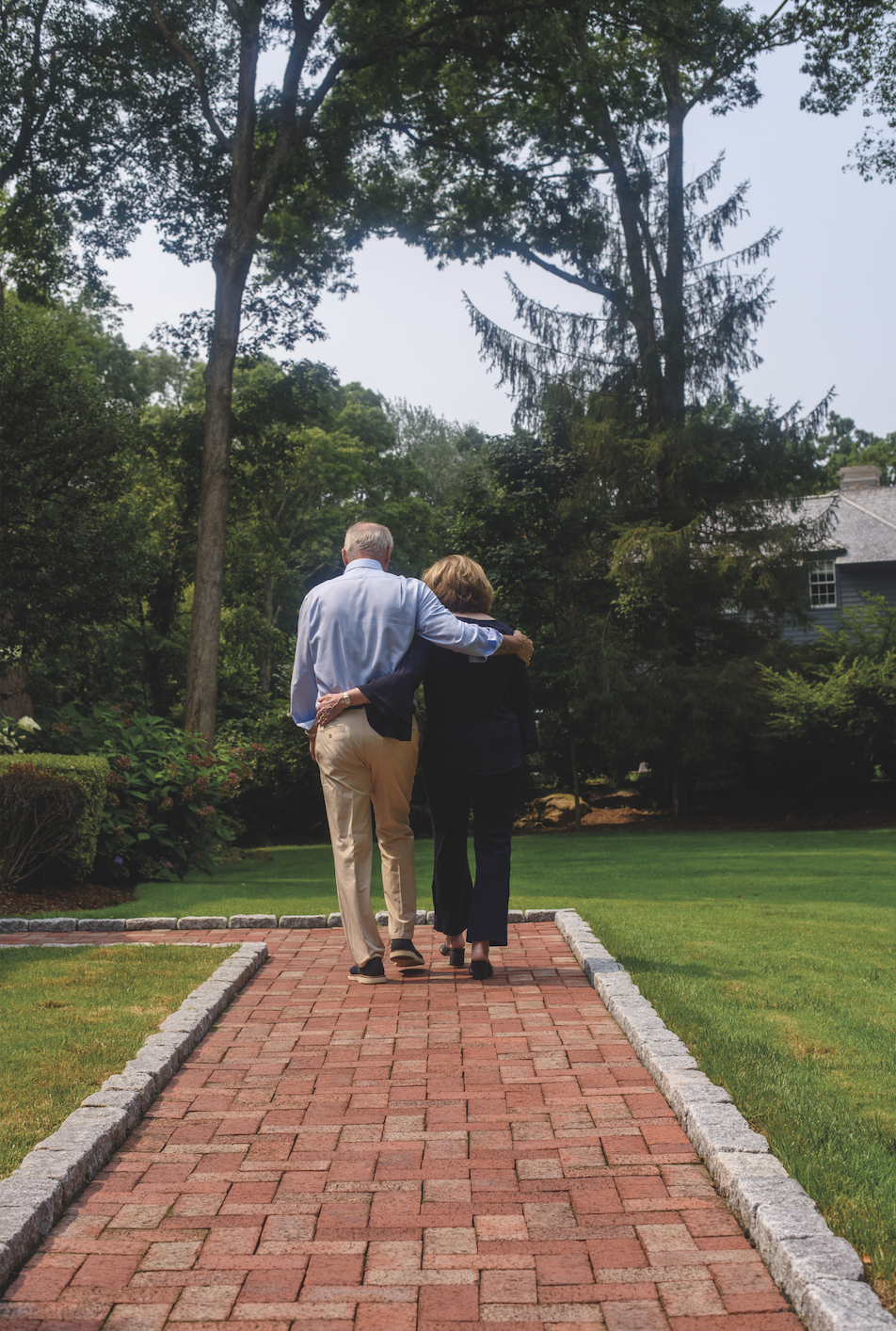
Profound Purpose
Twenty-five years after losing their son, Brad, on September 11, Mary and Frank Fetchet have transformed unimaginable grief into their life’s work.
On the morning of September 11, 2001, Mary and Frank Fetchet’s oldest son, Brad, an Equities Trader at Keefe, Bruyette & Woods, was at work on the 89th floor of the South Tower of the World Trade Center.
He was 24 years old, an accomplished athlete, and a beloved older brother to Wes, then 20, and Chris, then 13. As Mary would later tell the 9/11 Commission, “Brad was planning to become engaged to his girlfriend of three years, Brooke. When Brad died, my husband and I lost a son and our dreams for his future - a wedding, a daughter-in-law, and grandchildren. His younger brothers lost their best friend, a coach, a mentor, a confidant, and a companion. Brad was part of us.”
Shortly after the first plane struck the North Tower, Brad called Frank at work. He also left a message for Mary at home. He was in the South Tower and wanted his parents to know that he was all right. His building, he had been told, was safe. …Minutes later, United Airlines Flight 175 struck the South Tower. Brad’s office was above the impact zone.
…He never made it out.
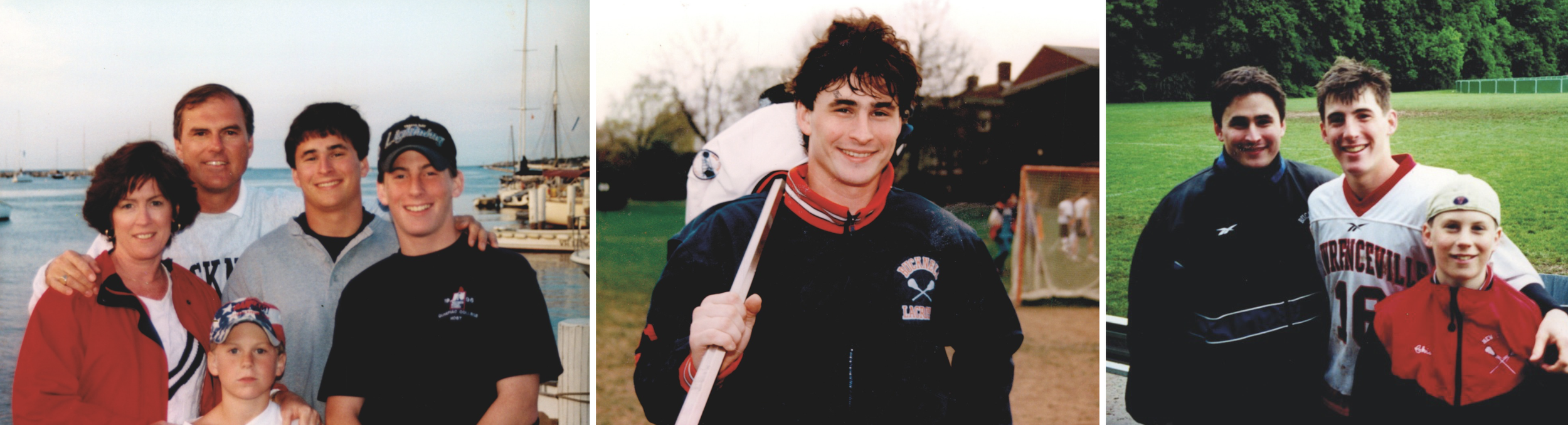
From Left: The Fetchet Family; Bradley Fetchet, Bucknell Lacrosse Team; The Fetchet Boys: Brad, Chris & Wes
The loss fractured the Fetchets’ lives into a before and an after. But what happened in the weeks, months, and eventually decades that have followed would become its own remarkable story…
“The days that followed were a blur, but the New Canaan community showed up in such a remarkable way,” Frank shared. “There was a constant stream of people at our house every day. Brad’s college friends spent days calling every hospital and filing missing persons reports. Our friends helped us to navigate planning a funeral without Brad’s remains.” And Mary adds, “We will always be most grateful to our family - and our friends that feel like family - for everything they did for our family in those days, weeks, and months.”
The Fetchets, along with thousands of other families, were grieving while simultaneously confronting a bewildering series of practical questions. What was happening at Ground Zero and exactly what were the recovery efforts? How would remains be identified and families be notified? Where could families turn for information they could actually trust? And perhaps most importantly, with two other young sons… what was going to be done to make sure something like this never happened again?
Mary, a clinical social worker, immediately understood something that would ultimately shape the formation of Voices of September 11th - and it was that trauma does not unfold on a government timetable.
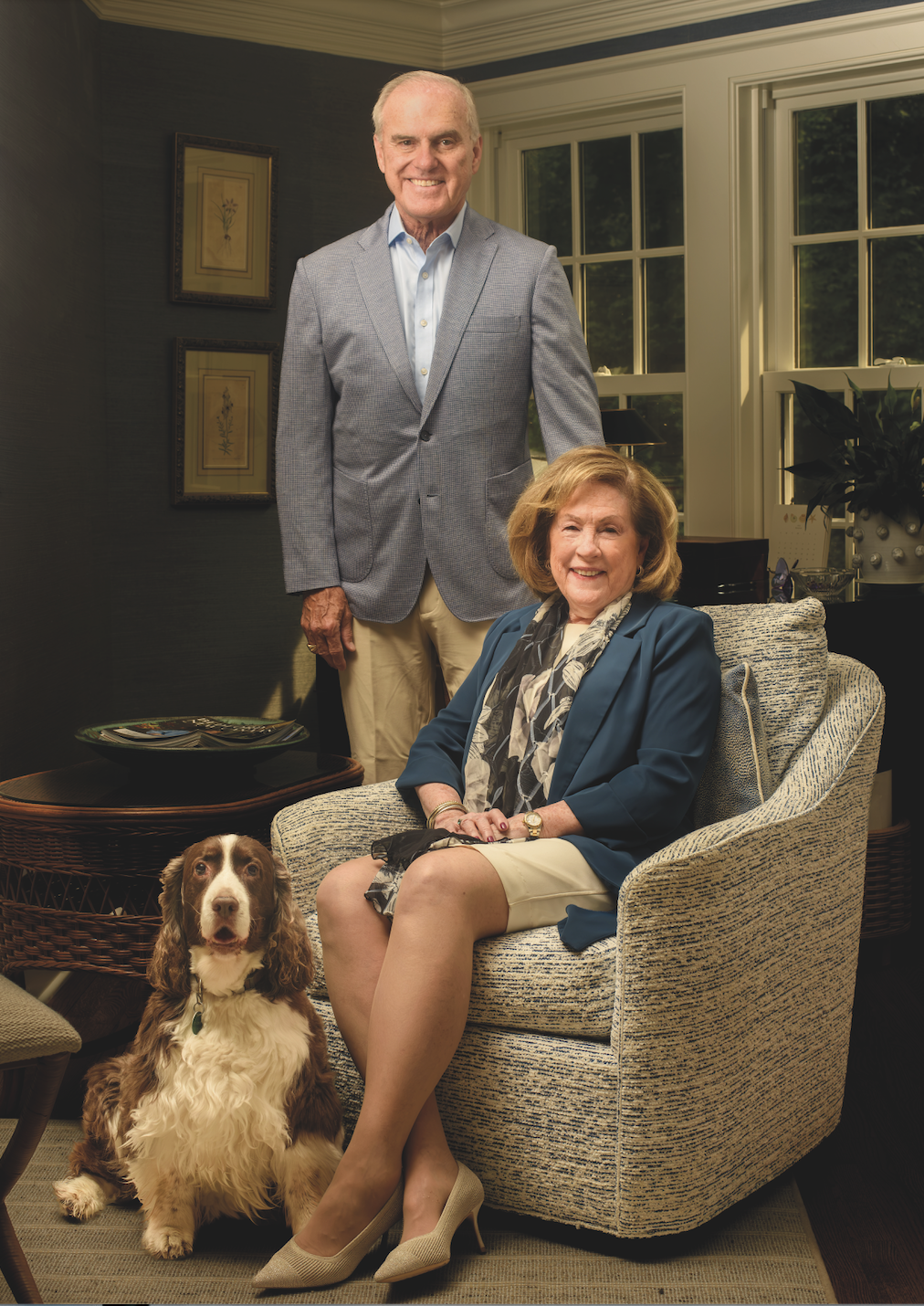
She began opening the Fetchets’ New Canaan home for weekly gatherings of Connecticut families who had lost loved ones. “There was grief, but there was also information sharing, problem solving, and the profound comfort of being around people who did not need an explanation for what you were experiencing,” Mary recalls. “That’s when I met Beverly Eckert, a Stamford resident whose husband, Sean Rooney, was killed in the South Tower.” The two women recognized the enormous difficulty families were having obtaining accurate information and navigating the systems suddenly surrounding them. “Beverly and I were able to start going into New York and obtaining information, and then disseminating it to the other families meeting with us.”
“It was through that information gathering, and those meetings, that we decided to start an organization… and our goals were to accomplish three things: provide information and support to individuals that had lost a loved one; honor the lives that were lost, and; do what we could to make sure this couldn’t happen again,” Mary shares. “Those were the founding principles of Voices of September 11th, now Voices Center for Resilience.” The organization began in late 2001, formally incorporated the following year, and opened its first office in New Canaan in November 2002. Mary started to emerge as a leading voice, advocating for victims’ families, and was asked, just weeks later, to sit in on a meeting with Senator Hillary Clinton, who was trying to understand a victim’s families’ point of view. “I stopped working on 9/11, but I had a clinical social work background, my youngest was in middle school, and my husband went back to work a few weeks later… It was easier for me to be able to throw myself into becoming an advocate than it was for the women with small children who had lost their husbands - and the primary breadwinner of the family… Once I started attending the meetings in New York City, I was viewed as an advocate and would get invited to the next meeting,” Mary reflects.
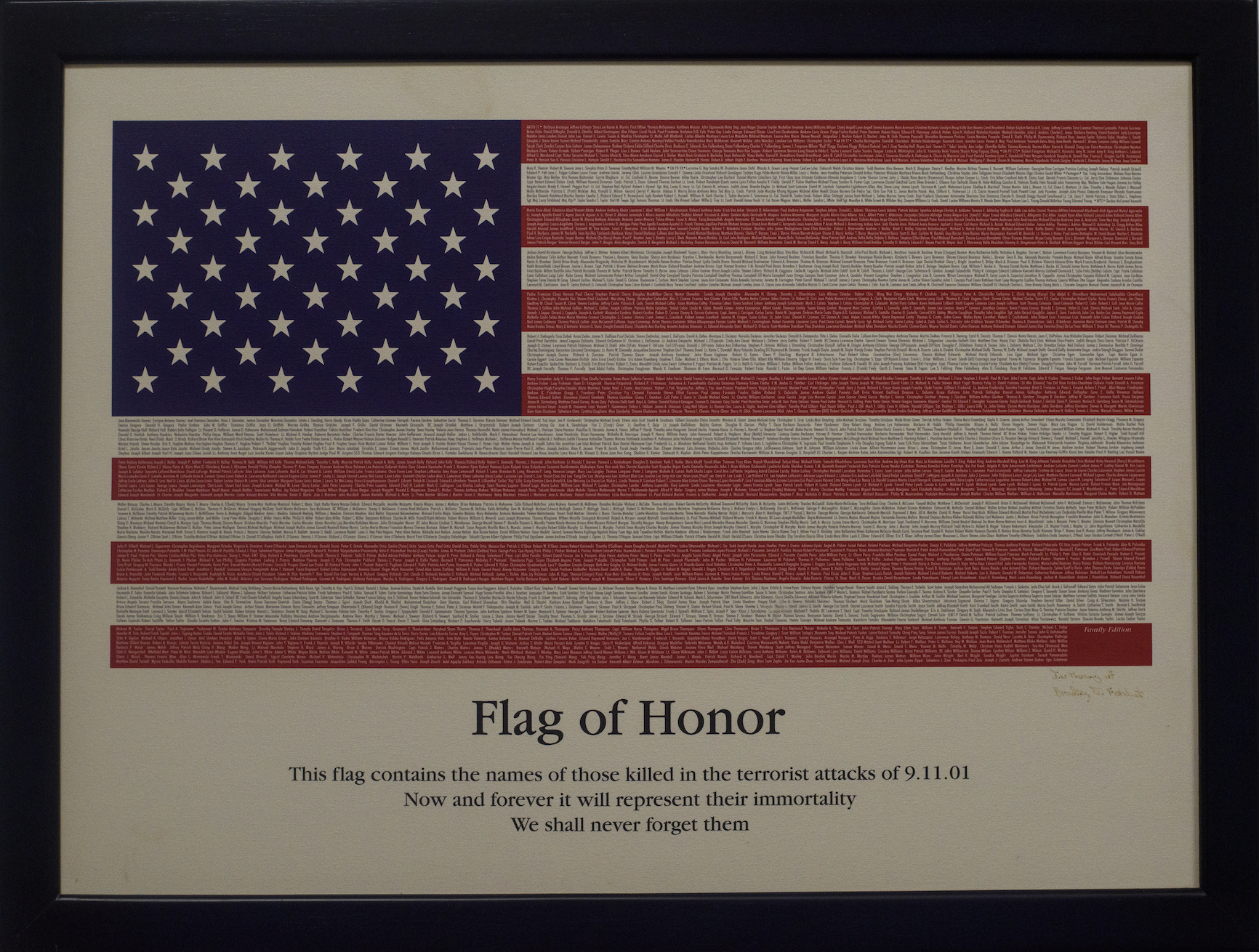
“2,977 people, including 403 first responders, died a horrific death, and just reading The New York Times we realized that there had been horrendous government failures,” Mary states. And Frank adds, “The number one reason that government exists is to keep us safe as citizens…and there was a real lack of accountability and responsibility in the aftermath.”
Mary began traveling with other families to Washington, D.C. to meet with representatives and join meetings - both as the voice of a bereaved mother, and as a newly minted activist, fighting for the creation of the 9/11 Commission. “I probably made a few hundred trips to Washington during those four or five years. First I was working to get the Independent 9/11 Commission created…and believe it or not, there were people that didn’t want to have the commission. I even had a Southern Congressman tell me that ‘I was not his constituent and 9/11 was a New York problem’ …When the Commission was ultimately created, I testified at the first public hearing in March 2003, and pressed Commissioners to examine the systemic failures that had contributed to the attacks. Along with other family members our efforts led to sweeping intelligence reforms that are keeping our country safer today.”
At the same time, Mary was determined that the nearly 3,000 people killed on September 11 would be remembered not simply as names on a list or victims of a historic event, but as people.
While the 9/11 Memorial was being built, VOICES created the 9/11 Living Memorial Project, working directly with families to collect photographs, written remembrances, audio, video and personal keepsakes documenting the lives behind the names. The archive eventually grew to more than 87,000 photographs and other digital materials, preserving stories of the 2,977 people killed in the attacks. The collection is now a core component of the In Memoriam Exhibit at the 9/11 Memorial & Museum in New York City.
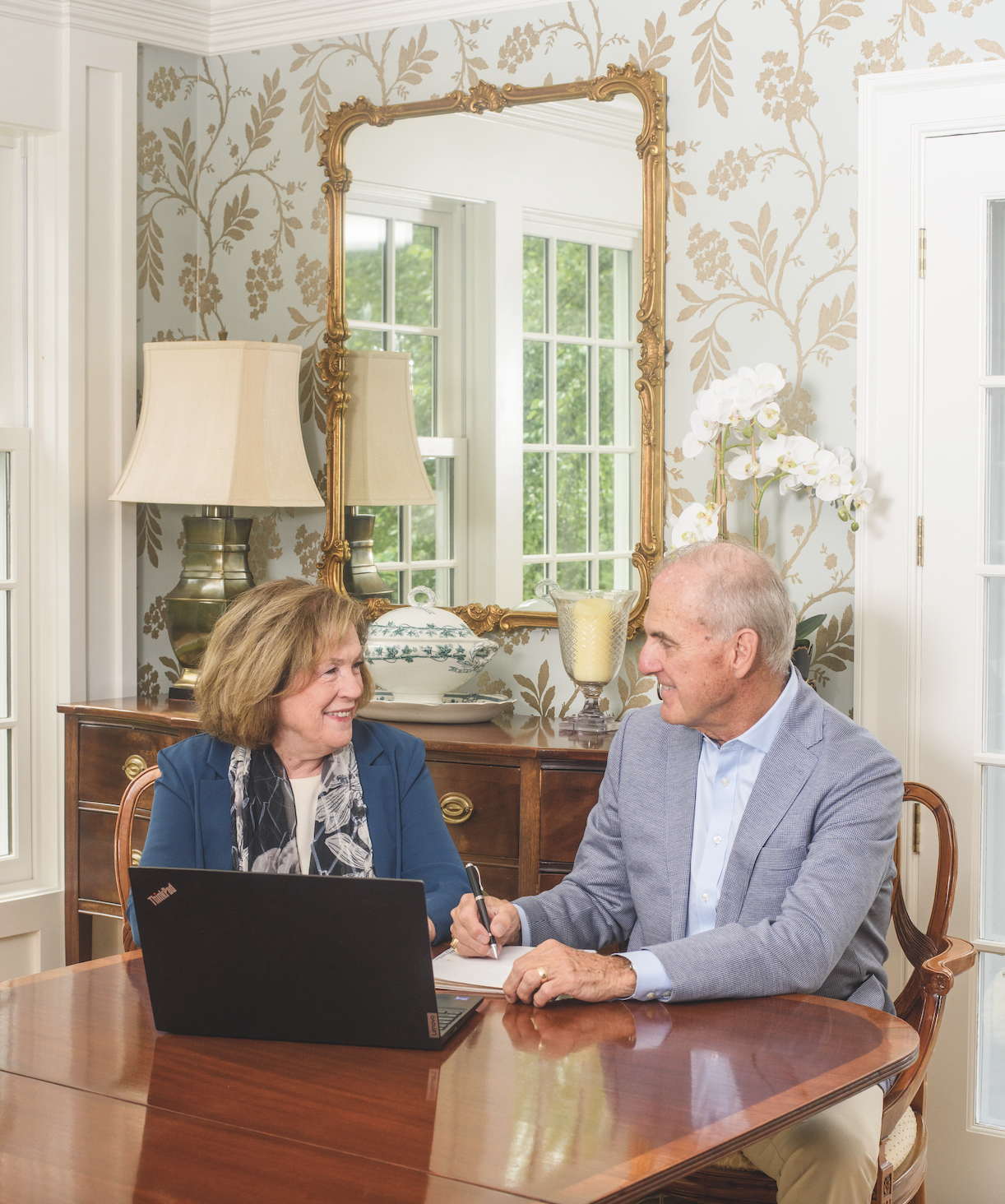
The process of collecting those materials was itself a form of healing. Families could talk about who their loved ones had been before September 11… their personalities, jokes, friendships, ambitions and ordinary moments. For Mary, whose professional background had taught her the importance of allowing people to grieve in their own way and on their own timeline, remembrance became another form of care. “It also became an important piece of the historical record. As a generation comes of age with no personal memory of September 11, at VOICES, we see education as increasingly important. The 9/11 Memorial & Museum plays an essential role,” Mary says, “but organizations like VOICES carry something different - lived experience. And we’re still collecting information and personal stories to this day.”
“I don’t see the impact of 9/11 going away,” Mary says. “It’s a rippling effect…In the immediate aftermath of a catastrophe, resources pour-in. Attention is focused. Agencies mobilize. Communities rally. But months and years later, the cameras leave and much of the infrastructure disappears - even as survivors and families continue living with the consequences. VOICES was built around a different model - continuity of care.”
In addition, over time, the Fetchets began to recognize that many of the lessons painfully learned after September 11 could help people confronting other tragedies. “I remember I was at a seminar on trauma response when I first heard about Sandy Hook,” Mary recounts, “and I thought, we can help!”
“Twenty-five years after September 11, responders and survivors continue to become ill and die from conditions related to their exposure at the World Trade Center site. VOICES continues helping members of the 9/11 community navigate the World Trade Center Health Program and access medical and mental-health services, compensation programs, peer support and other resources. But we’ve also used the expertise and resources that we’ve organized to support communities affected by mass violence - including Sandy Hook, Parkland and Charleston. And the objective is not simply to respond when tragedy happens, but it is to build networks before they are needed. Consequences can be mitigated when people have the resources they need,” Mary says. “That didn’t happen after 9/11. And we are helping to mitigate that in future tragedies.”
The organization works with hundreds of subject-matter experts in mental health, law enforcement, counterterrorism, emergency management, victim services, and other disciplines. Its digital resource library makes research and evidence-informed materials accessible to professionals, while their trainings teach communities how to build a coordinated response around the needs of victims and survivors. VOICES has also conducted research on subjects including bereavement of victims’ families after terrorism, and World Trade Center survivor grief.
Emergency preparedness traditionally concentrates, quite understandably, on saving lives - evacuation plans, law-enforcement response, communications, hospitals and physical security. VOICES argues that behavioral and mental health must be incorporated into those plans from the beginning, along with systems for identifying and tracking those affected, documenting responder exposures, coordinating services and maintaining contact long after an incident disappears from the headlines.
Still, for all the organization’s national and international reach, VOICES remains deeply rooted in New Canaan. Frank joined the organization full-time as a volunteer in 2008 after a nearly 33-year career at IBM and today serves as Chief Operating Officer, overseeing operations, legal agreements, administration and fundraising. Mary remains Executive Director and President. Several members of the staff have been with VOICES for more than two decades.
“These people have become our extended family,” Mary says. “And they deserve all the credit for what VOICES has done. There are so many people that have stepped up to help. And that especially includes the New Canaan community, which has supported VOICES financially and personally since its earliest days. We’re so grateful!”
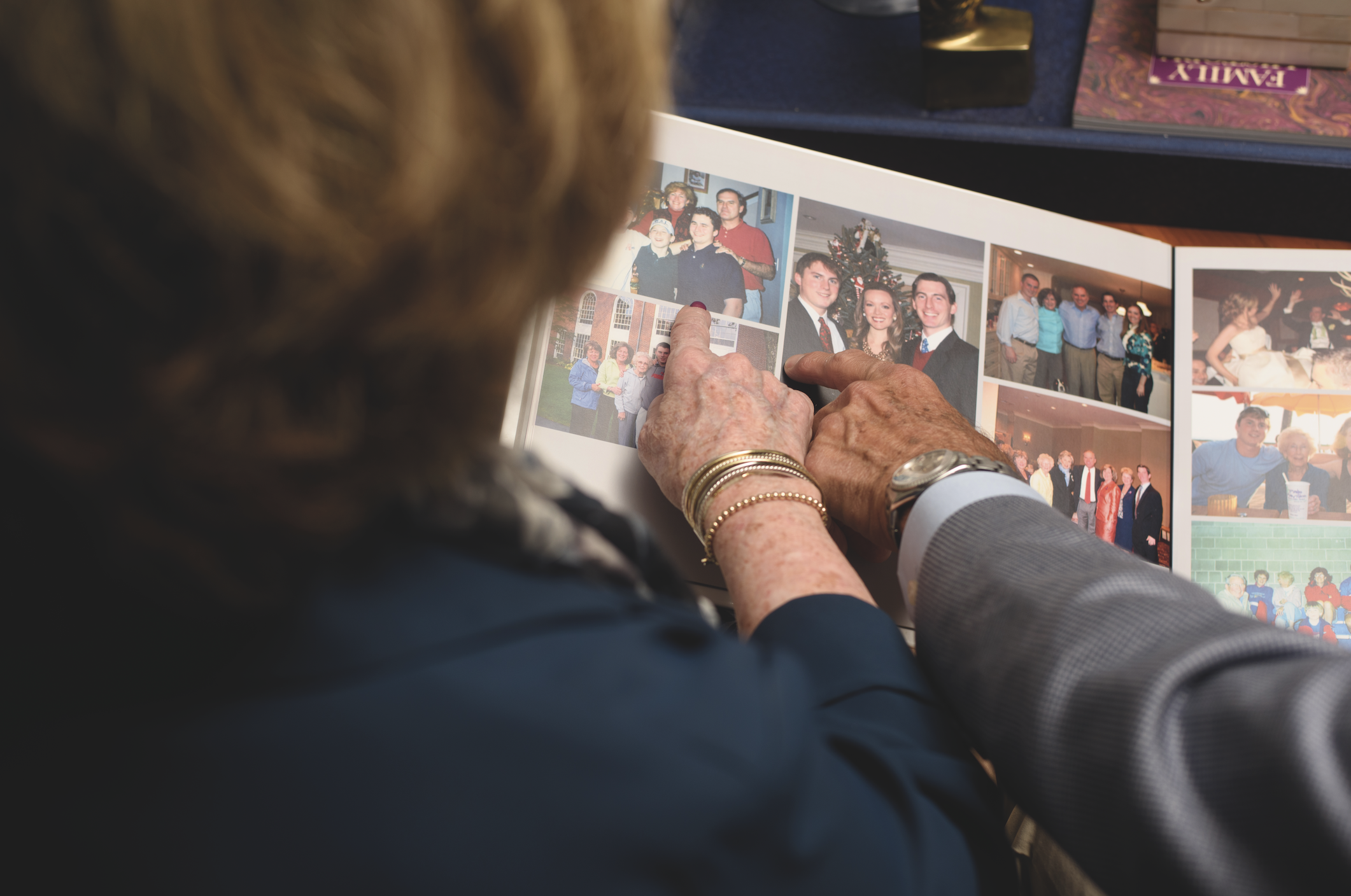
This September brings an anniversary that is particularly challenging for the Fetchets…as September 11, 2026 marks 25 years since the attacks…and 25 years since Brad died. This year marks a time when Brad has been gone longer than he was alive. Frank describes the hurt as still “right below the surface”.
For the 25th anniversary, VOICES is expanding its annual New York City Symposium to three days, September 8 through 10, bringing together leaders in global security, law enforcement, counterterrorism, and emergency management, alongside 9/11 families, survivors, responders and those who serve them. A commemorative luncheon follows on September 11. The gathering is both retrospective and forward-looking - an opportunity to consider what has changed since 2001, what has been learned, and what remains to be done.
The three pillars around which VOICES was established in those first chaotic months - supporting those impacted, remembering those who were lost, and making communities safer - remain at its core. But a fourth is coming increasingly into focus - taking 25 years of accumulated knowledge and making sure it changes the trajectory of preparedness.
“When you step back, we all face challenges,” Mary says. “We have made the best out of what we have in order to help others. For the love of our son, Brad, and with the conviction that others should not have to suffer an unimaginable loss and navigate that devastation alone.”