
Cover Story
The Case for Gallantry
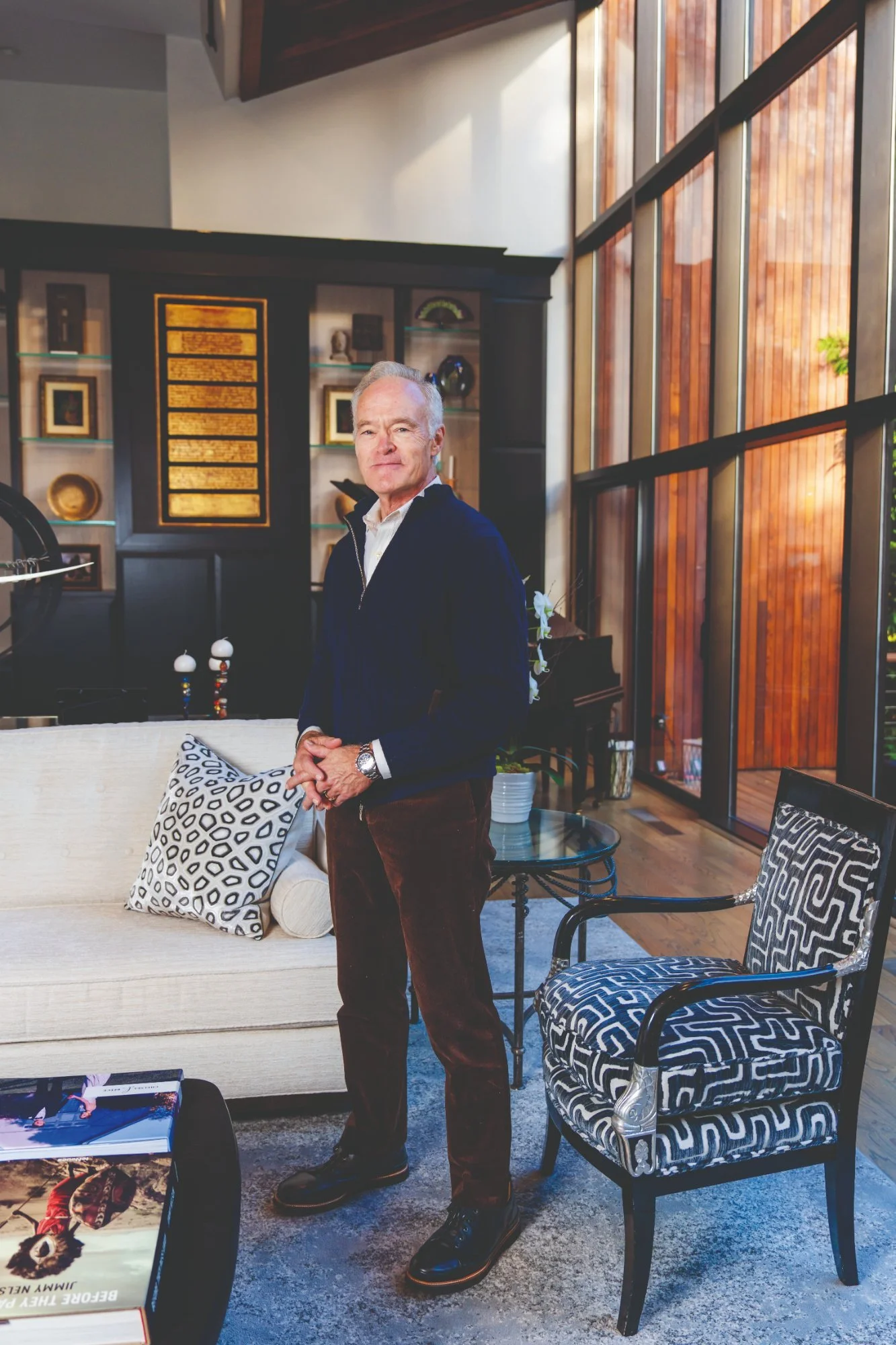
He needs no introduction. During a thirty-seven-year career with CBS, Scott Pelley served as CBS News’s Chief White House Correspondent, then Anchor and Managing Editor of the CBS Evening News, and ultimately a Correspondent on CBS News’s 60 Minutes. His visage evokes 60 Minutes’s famous ticking clock in the background and his no-nonsense introduction of a new hard-hitting exposé.
As a newsman, Scott Pelley is the Walter Cronkite and Edward R. Murrow of our time. Always impartial and objective. Reporting the story, rather than taking a side or becoming part of it. He’s interviewed almost every world leader and history maker in the modern era, every newsmaker from Alex Rodriguez’s steroid supplier Anthony Bosch to the “Godfather of AI” Geoffrey Hinton, and, before or during their term, every president since Clinton. And he stands-out as having perhaps the most long-standing career as a reporter, news correspondent, and TV anchor in the modern era, with objectivity and integrity remaining perfectly intact and unmarred by subversion, scandal, personal problems, or partisanship. In fact, he was fired by the new owners of CBS this past June after taking a stand in defense of what he viewed as 60 Minutes’s independence and integrity. Among other incidents, Pelley says he refused CBS’s demand that he mischaracterize ICE’s actions and involvement in the shooting of Renee Good in Minneapolis on January 7, 2026. He’s the gold standard.
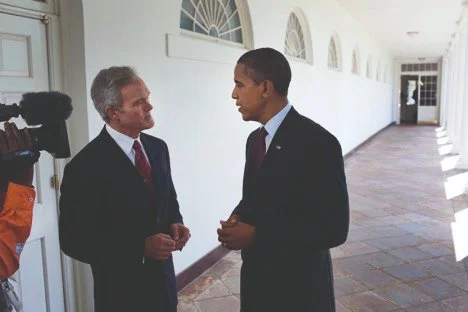
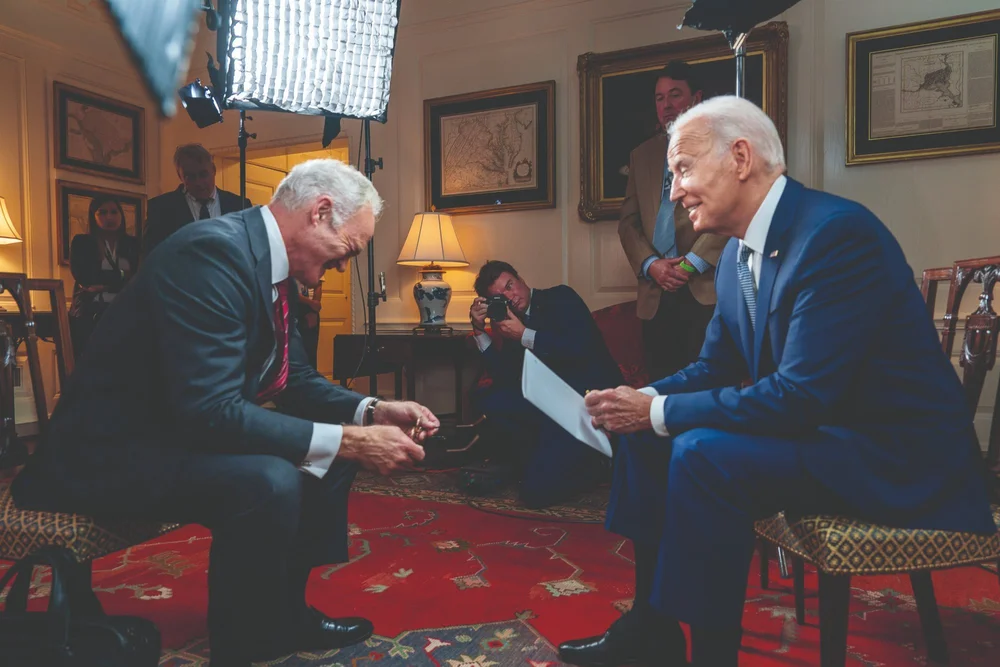
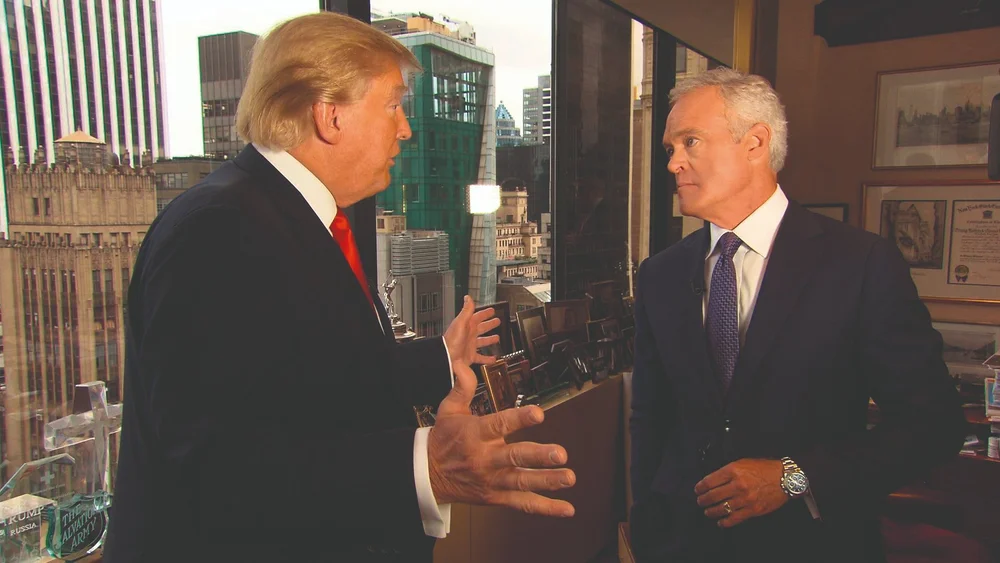
When I told Scott that, although I could recall him doing very stern interviews with each of Bush, Obama, Biden, and Trump, I still couldn’t tell which way he voted…Scott smiled with satisfaction, and responded, “Thank you. I love that!”
And as a journalist, Scott might best be compared to Upton Sinclair or John Steinbeck, using the power of his coverage and the public exposure it brings to bear on a wide variety of societal wrongs and injustices. …Making it entirely fitting that the Grapes of Wrath is Scott’s favorite book - and poignant that he gave a leatherbound copy of that epic story of human toil and redemption to Pope Francis when he did that interview for 60 Minutes in 2015.
“All of my work and the whole of my career has been about justice and human dignity,” Scott establishes. “There is precious little of that in our world, and I just believe that if you shine a light in some of these dark recesses around the world that you create change. And we do! People, the American people in particular, are incredibly generous and typically rise to the occasion when you show them an injustice or a need. I’ve seen it happen repeatedly throughout my career.”
“I’ll tell you a very quick story to illustrate what I mean,” he continues. “I did a story a number of years ago for 60 Minutes called Mercy Ships, about an American charity with a ship that went up and down the west coast of Africa, performing life-changing surgeries on children with cleft palates and other deformities. …Fast forward two or three years after the story, I’m in a restaurant with some friends, and a hand lands on my shoulder from behind me, which is not unusual, and the guy says ‘You’re Scott Pelley,’ and I said, ‘That’s right’, and he said, ‘Well, you changed my life!’ He said, ‘You did a story called Mercy Ships and we were so moved by it that I asked the Mercy Ships people if my daughter and I could go to West Africa and see what they do, and we did that. And we were so impressed, we came back to the United States…and I wrote them a check for $250 million so they could buy another ship!’. It turned out this gentleman was a multibillionaire real estate developer from Cincinnati.”
“And, as another example among so many,” Scott adds, “we did a story on an organization called Remote Area Medical that runs free clinics all around the United States. Thousands of people come to these free clinics for free medical care. Tens of millions of dollars were donated to Remote Area Medical after our story ran - and now they’ve expanded from doing six clinics a year when our story ran, to one clinic every week in another American city with need.”
B&NC MAG: Why and how did you become a reporter and a journalist in the first place, and did you have a mentor who helped?
PELLEY: I had a high school Journalism teacher - Marjorie Wilson, Coronado High School, Lubbock, Texas - who was on fire to teach. I was very interested in photography, which drew me to the journalism class in the first place, and when I met Marjorie Wilson she made it sound like the most exciting and the most altruistic thing you could possibly do with your life.
I got a job at the local newspaper, the Lubbock Avalanche Journal, as a copy boy, working the overnight shift - three to midnight. I lied about my age, ‘cause they only hired kids who were sixteen, and I was only fifteen. I was working in the wire room one night after about a year-and-a-half and the executive editor of the newspaper came in, a big, burly guy, silver crew cut, kind of Marine Corps bearing. His name was Dave Knapp. And he looked down at me and he said, ‘Do you want to be a reporter?’ And I really wanted to be a photographer. And I said, ‘Well, I don’t know. I never gave it any thought.’ He said, ‘Well, do you or don’t you?!’ And I said, ‘Well, sure, I guess’. And I’ve been a reporter ever since. He marched me out into the newsroom, sat me in front of a typewriter, which I didn’t know how to operate, and I’ve been doing this ever since.
I pestered the news directors at the three television stations in Lubbock until one of them finally just gave up and hired me. His name was Rusty Jones, and he really showed me how to do television. I had to do everything in that market. I’d go out, I’d shoot my own story, I’d develop the film, I’d cut the film, I’d write the script, I’d record the track, and then once I’d done all that, I would write the 10 o’clock news for the anchorman. So in doing all of that, I learned everything about what a photographer does, what are an editor’s limits, and how you write for television. I did that all the way through college at Texas Tech.
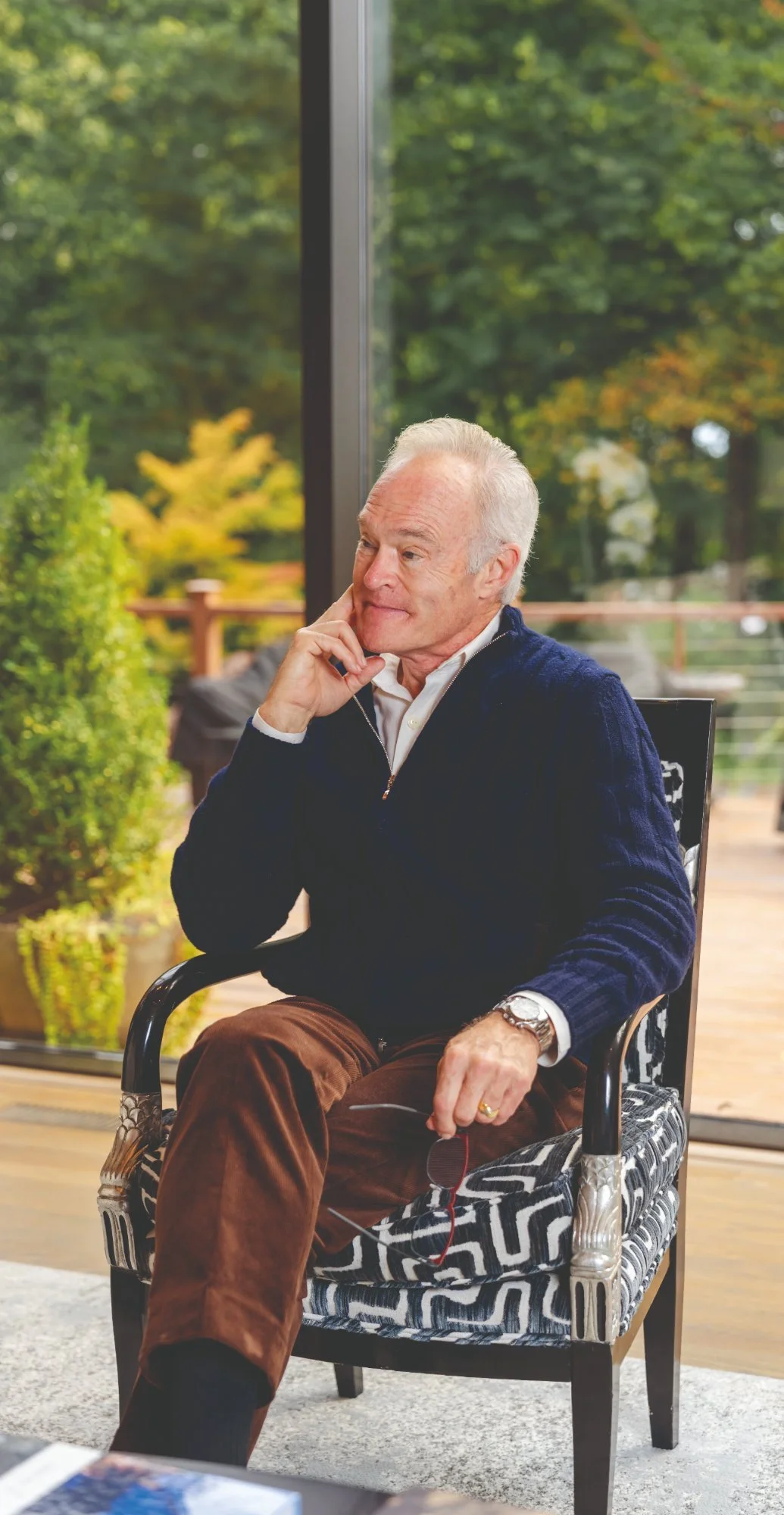
CBS was “the shining city on the hill” for me, and I had mentors at every stop. Jeff Fager, in particular, was involved in each of the big bootstrap moments in my career. He was Executive Producer of the Evening News when I was a Bureau Correspondent in Dallas, and for some reason he thought I could be a great chief White House correspondent. When Jeff went on to 60 Minutes, he gave me the opportunity to be a Correspondent. Then, when Jeff became Chairman of the entire news division, he made me Anchor and Managing Editor of the Evening News.
And then there was Richard Threlkeld, who taught me how to be a writer. And Bob Simon, who taught me how to be a war correspondent.
B&NC MAG: Do you still do photography?
PELLEY: I do, yeah, I do. As a hobby. One of the things about being a journalist at the network level, especially at 60 Minutes, is that you travel all around the world and to very exotic places. And so I’ve had an opportunity to shoot quite a few images from all around the world, and they’re all in a video file. I haven’t published them or anything like that. It’s just my own little hobby.
B&NC MAG: Is journalism still a critical and working part of the American system?
PELLEY: I think that remains to be seen. I do believe that the algorithms have broken politics. I think you can trace the terrible division in our country, between the extremes, to the advent of algorithms of outrage. I don’t know how to address that.
But I believe that the counterweight to that is journalism. And to the extent that people consume quality journalism, they can be brought back from that brink and be part of a country that speaks to itself, a country that seeks to be a better country, with liberty and justice for all. And that’s one of the reasons I’m a journalist.
I begin every class at Columbia by telling the students, ‘There’s no democracy without journalism’...and I end every class telling the students ‘Now go out and save the country!’. I just want the students to know what the stakes are and how important their work will be when they become journalists - because it’s nothing less than helping the American people understand what’s going on around them so that the American people can save the country.
B&NC MAG: What do you consider quality journalism and what news do you consume?
PELLEY: I was on a flight last night, and all the people around me were on their phones flipping through verticals. Getting their news ten seconds at a time from...heaven only knows what possible source it could have been coming from. And I’m watching the people all around me, and this is how they’re informing themselves. At least in that moment, on that plane. So that worries me a great deal.
I don’t think the American people understand the situation that we’re in in terms of information. We are in a moment where never in human history has more information been available to more people, and that is a great thing. But we’re simultaneously in this place in human history, where there’s never been more bad information available to more people. …And that’s the battle, isn’t it? It’s the battle between good and evil. It’s the battle between truth and fiction. And that’s the battle we’re engaged in now.
And, how AI is going to figure into that concerns me a great deal at this moment in time, because now we can automate propaganda, and it’s much easier to automate lies than to automate the truth. …I worry a great deal about the authenticity of information. The authenticity of pictures and video, which can now be faked in any number of ways. You used to see things on television, and you knew they were real. And now you have to ask yourself the question ‘Is this real or is it fabricated’?
“…I worry a great deal about the authenticity of information.”

I’m still pretty old-fashioned in terms of the news I consume as I start every morning reading the New York Times, The Washington Post, and The Wall Street Journal - and follow their stories online throughout the day. I read the Cook Political Report because I think it’s the best bipartisan political analysis available. …I’m very devoted to traditional journalism coming from organizations which have what I call reputational risk - that if they get something wrong, it’s gonna be a scandal. As opposed to websites that, you know, ‘Oh, we got that wrong, but who cares?’. You know, when 60 Minutes made any mistake in the past Hollywood has made a movie about it.
I read a lot of history and historical biographies. I’m reading a book right now called 53 Days that’s a fascinating recapitulation of how Hitler took over the entire German government in only that amount of time - and it’s a very compelling story with many parallels to what’s happening today.
And I read a great deal of Buddhist philosophy, including notably the writing of Pema Chödrön, who has written a number of wonderful books about open awareness. I would not call myself a Buddhist and I’m no expert, but I find strength and solace in the philosophy of living life with an awareness and appreciation that you’re part of the bigger universe - and the lesson of personal humility that comes from that understanding.
B&NC MAG: Is journalism honest work?
PELLEY: Hmmm. Boy, well, when it’s practiced correctly honesty is a hallmark of our profession... Like just about any other profession - they’re honest work if you deal with them honestly. And I think journalism very much has an imperative to be fair, to be honest, and to be balanced.
B&NC MAG: Have you ever thought about running for office?
PELLEY: After I was fired at 60 Minutes, I received letters from people asking me to run for President. Ha! But seriously, people have asked me that, and...you know, I think politics would require me to lie, and I can’t do it... Very simply. Walter Cronkite was asked that. People tried to get Walter to run for national office, and he said, ‘I’m not a politician. I am a reporter.’ He knew who he was. And I feel the same way. I think I know who I am and where I’m best suited to try to help my country. I don’t think politics is that.
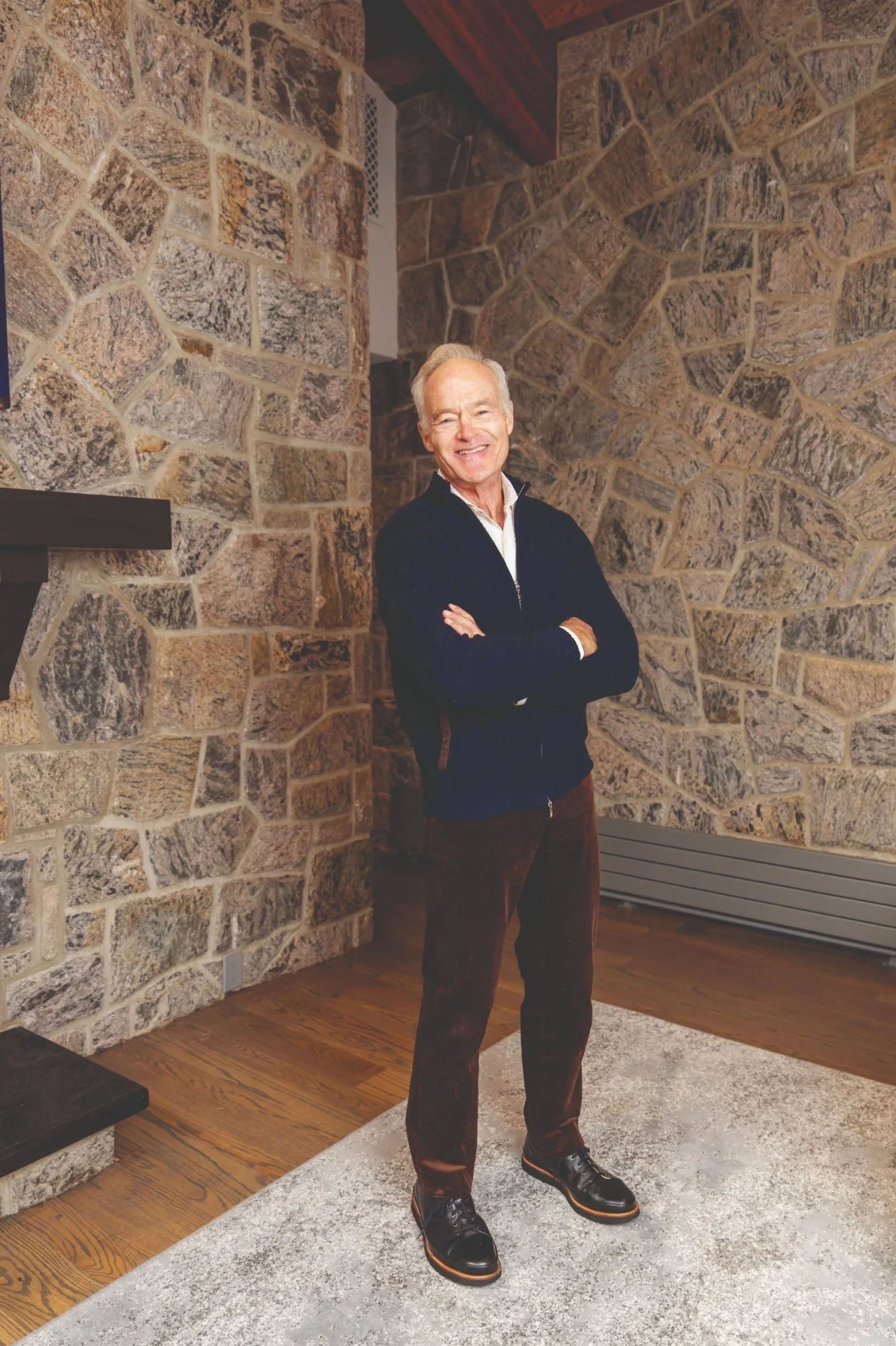
B&NC MAG: When you are interviewing someone - and particularly an intelligent and well-prepared subject, whose primary objective is getting their own message across - how do you get that person to open up and to tell the truth?
PELLEY:
You know, you listen.
When we’re interviewing people, we spend a lot of time figuring out what the questions are going to be. Particularly if you’re interviewing the President of the United States, you work on the questions, and you research the questions to make sure that they are factually accurate and penetrating in some way. But I usually ask the first question and never look down at the paper again. Because at that point…it’s a conversation, and I’m listening to what he’s saying.
And the great moments in interviews - and this was Mike Wallace’s special talent - the great moments in interviews are when somebody says something and you play off of that. Mike was famous for saying, ‘What do you mean?’ Or, ‘What are you saying?’ in order to draw things out of people. And that’s, I think, the secret to a great interview, and the secret to getting at the truth - it’s to listen to what the person is saying, for clues that will take you to the truth.
“But I usually ask the first question and never look down at the paper again. Because at that point…it’s a conversation.”
B&NC MAG: So then, maybe in terms of getting to the truth, who are the three greatest interviews you’ve done?
PELLEY: George Tenet, who’d then just resigned as Director of the CIA. We had quite a donnybrook about whether enhanced interrogation was actually torture, and I think I got him to confess that it was. That was a very memorable interview for me, because it was so lively. George was a guy who gave as good as he got, and we really got into it with each other. It was fun for me and I think it was fun for him as well, because he wanted to talk about these issues and hadn’t been able to do any interviews as Director.
Mahmoud Ahmadinejad, the President of Iran. I pressed very hard on their nuclear weapons program. I pressed him so hard that at one point, he said, ‘Are you with the CIA? This isn’t Abu Ghraib. This is Iran, and I am the President of this country!’.
And then el-Sisi, the President of Egypt. I interviewed him in New York, and no one had ever asked the questions about mass arrests and attacks on civilians that brought him to power. I believe that interview had an enduring impact in the Egyptian diaspora around the world.
B&NC MAG: And who are the first people who come to mind that you’d like to interview now?
PELLEY: Vladimir Putin. Pope Leo - I interviewed Pope Francis, but interviewing the American Pope would be sensational. Elon Musk - I’ve interviewed Elon several times in the past, but not in the last ten years, so it would be very interesting to try to get into that head again. And Dario Amodei, the head of Anthropic, who is probably the most interesting thinker on AI.
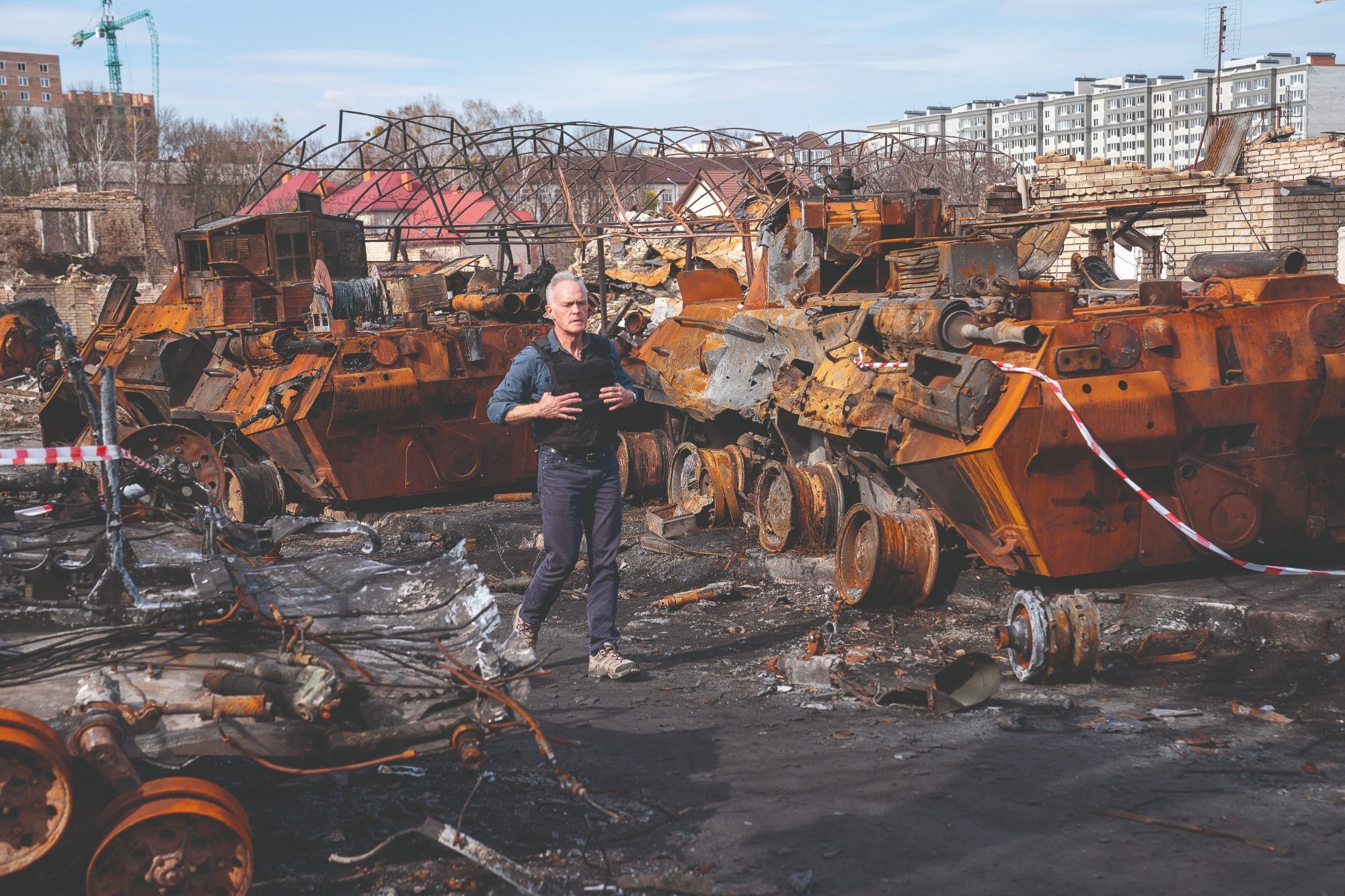
“A fireman or a policeman might go to a cataclysmic event once in their career - we go to all of them.”
B&NC MAG: You’ve spent your entire career observing the ravages of war, famine and natural disaster. How can you move on from one story to the next without becoming obsessed by each, and without all the storm and strife of the modern world driving you crazy?
PELLEY: By focusing attention on worthy causes my coverage has really made a difference in a lot of circumstances. When you see the kind of results I have, you’re almost eager to throw yourself into the next one and the next one. …And I do ‘stay involved’ to some extent - I often work with charities I’ve covered in stories over the years, and I was a long term member of the Board of the International Rescue Committee.
But it is very important, and I tell my students at Columbia this all the time, to manage your mental health, and to be open to counseling if it can be beneficial. A fireman or a policeman might go to a cataclysmic event once in their career - we go to all of them.
B&NC MAG: And then, in light of our political divide, the state of journalism and information, and all the horrors of the world, what gives you hope? You always seem to end each story with a glimmer of hope.
PELLEY: What gives me hope is that I believe the vast majority of people have empathy for their fellow man and have kindness in their hearts. And I can prove it. I’ve seen it. If you look for it, you can see it all around you every day in small ways. But I’ve also seen it in profound ways, through my work, like with the Mercy Ships and Remote Area Medical stories I mentioned.
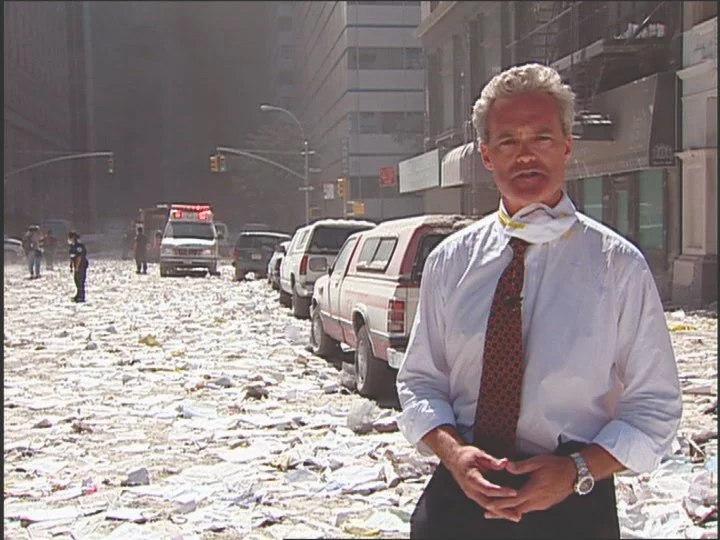
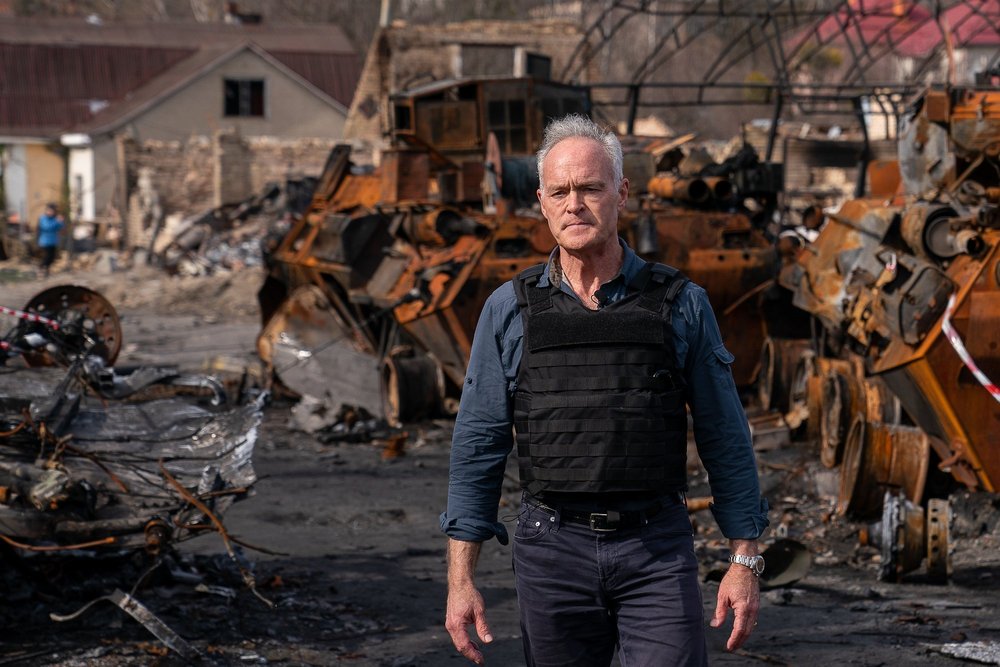
At the risk of repeating myself, there are two sides to this balance. I was at the World Trade Center when the buildings came down. I’ve covered combat in Afghanistan, in Iraq, in Kuwait, and South Sudan, and Ukraine. And so on that side of the scale, all of this can be quite heavy and can drag you into despair. …Unless you can see the empathy and the humanity and the kindness that occurs in these situations.
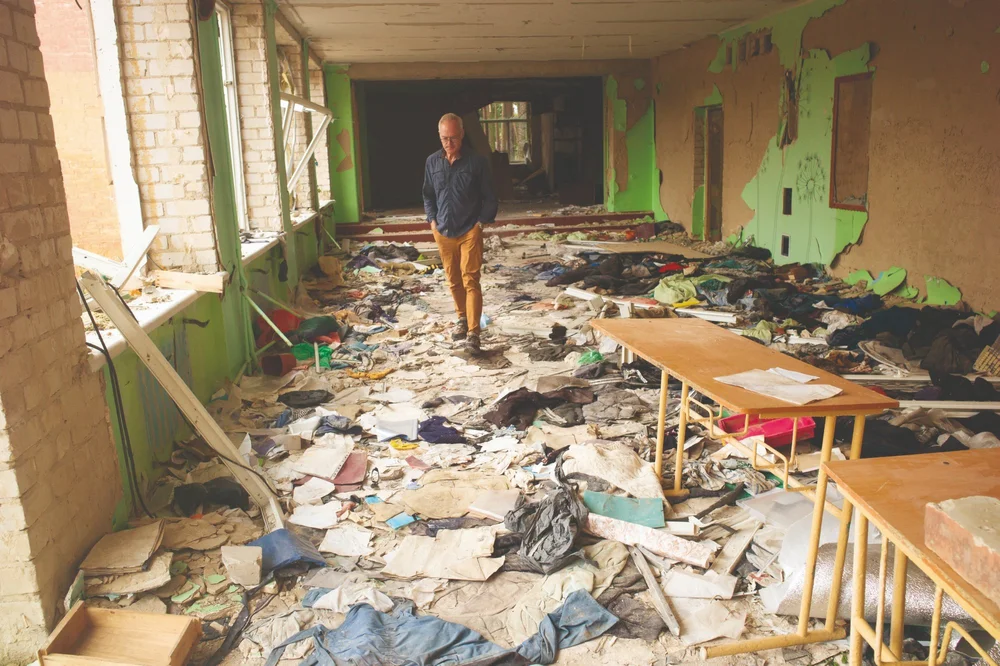
When I go to Ukraine, the horror there is unspeakable. And yet, I see people rising to that occasion. There’s an orthopedic surgeon in a hospital in Izium named Dr. Yuriy Kuznetsov and now his entire practice is amputating the feet and the legs of civilians who step on leftover Russian landmines. But you see his humanity, and you see the way he pours himself into this, and you see the fact that he still lives in Izium because he’s not going to abandon his patients or his country - and he’s doing all that with the Russians a couple of kilometers away.
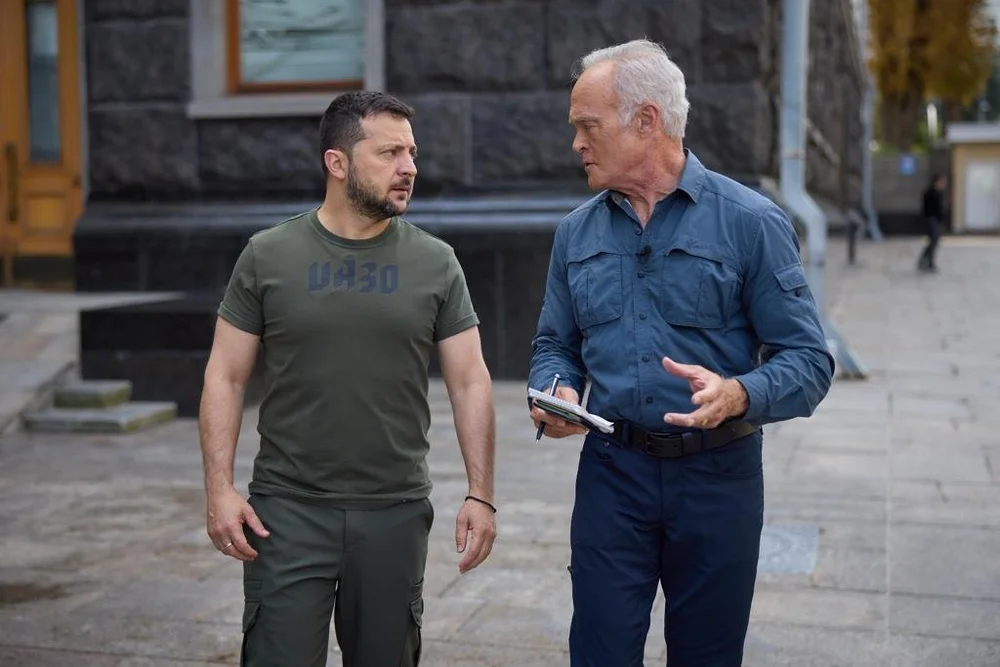
And then there’s Volodymyr Zelensky, who I’ve interviewed several times, stay in touch with, hope to interview again, and consider to be one of the great figures of the 21st Century thus far. I have complete admiration for Zelensky and the people of Ukraine.
These people who demonstrate goodness and sacrifice in the face of all odds are certainly heroes, but the word that I prefer is gallantry. I look for that in stories. I think people love gallantry when they see it. All of our myths are about gallantry in one way or another. And so I look for that in the real world. …I’m doing what I do because these stories are so compelling…and give you a reason to hope.
The act of gallantry bestowed upon New York City on 9/11 by the FDNY may never be replicated again. 343 members died on that morning…and gave their lives, willingly, against the chance that they might save one person.
I’m inspired by people who are making a great difference in the world. José Andrés, the Chef who has World Central Kitchen, which is feeding starving people around the world. And then a whole lot of other people that you’ve never heard of, who are doing something in their community that’s making a big difference. Empathy in action. The idea of hope means a lot to me.
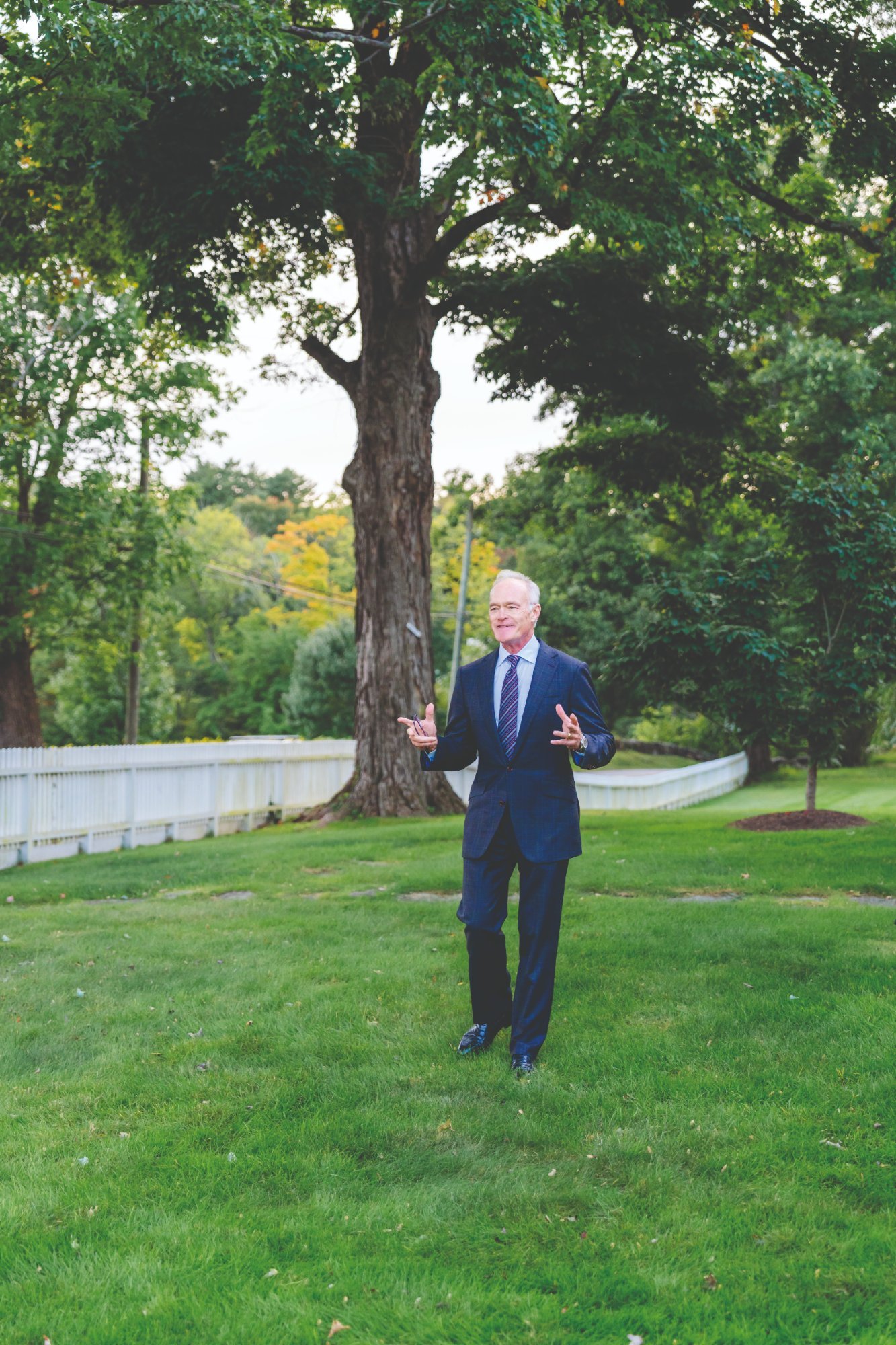
SCOTT AT THE MATHER HOMESTEAD
B&NC MAG: What’s next for you professionally?
PELLEY: If you want to get really busy in life, get fired. It’s a myth that you’re suddenly sitting at home with nothing to do. I’m covered up with projects and have probably taken on too many - but I’m trying to manage all the folks who’ve come to me with great projects, and give air to some of my own ideas. …There are books and documentaries I am looking at developing. And I have speaking engagements across the country.
I’ve just emerged from a three-network monastery where I’ve been living for forty years, and now that I’m out in the great wide world I’ve discovered things have changed. I don’t want to work for a network again, and I’m just gonna do my own production. …I’ve got a podcast in development and I’m focused on how to get the message out with social media - and to an audience with a shorter attention span. I’m trying to work my way into a world where everything is vertical and low production values are the norm, after decades struggling to create beautiful high-definition television.
Let me tell you what I did with my day on Friday. I was in a studio in New York City, and my agent, CAA, set this up for me, and we spent four hours digitizing my face, my body, my movements, my voice, even the way I laugh, all so it can be copyrighted - and primarily to defend against unauthorized users making an AI version of me! It’s a brave new world.
B&NC MAG: And what’s next for you personally? You’ve been a resident of Darien for over twenty years and raised your kids here, but we understand you now have a ranch in Texas?
PELLEY: We’ve always lived in suburban and exurban places. When I worked in Washington, we lived in Great Falls, Virginia, on a five-acre spread right next to the Potomac Great Falls. And so, when I had to move to New York suddenly because Ed Bradley died and my 60 Minutes workload jumped exponentially overnight and I needed to be in New York with the editors, we did a massive survey of ‘Where should we live?’ and a CBS friend who lived in Darien told us, ‘You ought to come have a look at this’. …We’ve now downsized to a smaller house in Darien than the one we raised the family in, but I still say to Jane, ‘I can’t believe we found this wonderful place’.
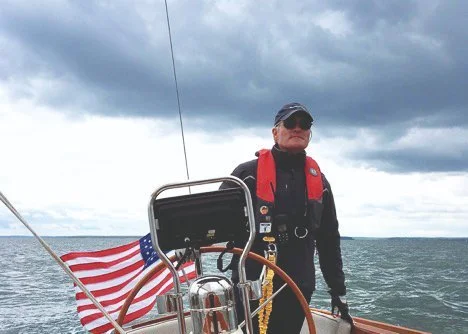
It’s been a joy to live in Darien. It’s a lovely community made up of wonderful people - and, most important, it is a very healthy place to raise kids. Both our kids went through the Darien public school system and had childhoods filled with friends, playing in the neighborhood, and having a good time. I took up sailing in an earnest way and bought a small sailboat we have on the Sound. And the proximity and convenience for getting into the City is tremendous. …And our children are nearby. My daughter and her husband and my son, his wife and our new granddaughter all live in Manhattan, so keeping the house in Darien allows us to see them - and particularly our granddaughter - often, and still maintain the place where they spend many weekends.
But, you know, I was born and raised in Texas, I met Jane in Texas and we lived in Dallas for twenty years and got married here and had our children here - and we love the Hill Country. About ten years ago, Jane kind of looked up and said, ‘Okay, what are we gonna do next?’ We started looking around and found this particular ranch on the Guadalupe River and kind of fell in love with the place…and so here we are - ten minutes from the middle of nowhere, no buildings in sight, and a nighttime sky with a tidal wave of stars.
We spend about half the year on the ranch. It’s our refuge. All my neighbors are cows. We’ve got flocks of wild turkeys, two varieties of deer, and wild boar running all over the place. And when people ask me if we’re growing anything…I tell them ‘Yes, Peace and Quiet!’.
B&NC MAG: How has being so devoted to your work affected your life, and - other than photography and sailing - what do you do to relax and have fun?
PELLEY: Well, it’s true - and I’m sure my wife and kids would tell you - that my work is my life and joy, and that I live to work rather than work to live. And my wife might add - justifiably - that I ‘don’t have much fun’. But let me be clear that I wouldn’t have been able to achieve any of this were it not for my wife, Jane. I feel entirely lucky to have had her support, and for our wonderful and joyous marriage of forty-three years.
My kids would say ‘no’, but I believe they were rightfully jealous about all the time I spent away working. I was gone a lot and missed a lot and I feel guilty about that - even though my therapist tells me I shouldn’t.
It’s one of the reasons I don’t do much in terms of recreation. I realized a long time ago that I was going to be away too much, and that I wanted to spend every minute I’m home with my family. So I never took up playing golf with my pals on Saturdays or cards with the guys on Wednesday night. …And I guess all’s well that ends well…my kids are both very well adjusted people and have terrific marriages.
I do go to the gym and maintain a strict protocol of weightlifting and running five-miles-a-day six-days-a-week. I consider myself to be somewhat athletic and do stay in shape, but I play nothing.
B&NC MAG: You are a man of great principles. Can you explain why?
PELLEY: Yah, I’m fanatically devoted to certain principles - being truth, justice, and treating others with dignity. It can - as you’ve just witnessed - cause problems in any career, but I don’t care about the consequences of standing up for what’s right. I am inflexible on these principles and this too has been a subject with my therapist for a while.
I don’t know what made me like this. There wasn’t somebody who sat me down and told me that these were the principles of an honorable life, and I’m not religious - although I have tremendous respect for people who find their strength in that kind of faith.
B&NC MAG: And do you think, despite being away from home too much, you’ve instilled the same adherence to principles in your children?
PELLEY: What a great question. I know that they learned the lessons of justice and human dignity, because that’s the way they live their lives. They grew up in our house, and Jane stressed values as much as I did. I hope it doesn’t bring them as much strife as it has to me. And yet, on the other hand, I’m not sure how it couldn’t.
I know that’s why my son became a lawyer. …When he was in law school he was home one morning, and, in our kitchen, he asked me, ‘Dad, do you know why I’m in law school?’ He went on to explain that he had chosen that path because when he was in middle school he’d seen a story I did on 60 Minutes about FBI agents and Justice Department prosecutors gathering evidence of war crimes in Serbia for future war crime prosecutions - and he said he’d come to the realization then that he wanted to do that kind of work for his career and figured he would need to be a lawyer to accomplish it.
I’m so proud of the people my children have become…and I hope they live their lives demonstrating an adherence to principles - while also finding a bit more selfish enjoyment than, perhaps, I have.
B&NC MAG: We met you in connection with the release of a new documentary about the Mather family and the Mather Homestead in Darien - in which you serve as the narrator. Aside from the proximity of the Mather Homestead being in Darien, why did you choose to be involved in this project?
PELLEY: When the people from the Mather Homestead called me and asked me to do this for them, it was an immediate and very easy ‘yes’. Generally speaking, I believe that we, as human beings, cannot know who we are if we don’t know our history.
The Mathers are a family with a long history of doing the right thing for community and country. Before delving into the documentary, I’d seen Ken Burns’s documentary on the National Parks - with the great title America’s Best Idea - and so I was familiar with Stephen Tyng Mather and the work he had done to institutionalize our National Parks and his having served as the first Director of the National Park Service. …But I hadn’t realized the Mather family’s involvement and contributions around the original settlement of the Northeast, in the Revolutionary War, or in the Civil War.
The Mathers have been exemplary citizens - always working to better themselves and at the same time better the country. Step by step, generation after generation, the Mathers have met the challenges that the country was facing in those moments and helped the country overcome them.
And the Mathers’s donation and dedication of the Mather Homestead to the Foundation is something quite beautiful. The Homestead sits on a valuable piece of dirt that the Mathers could have developed with a bunch of multi-million dollar mansions. Instead, they’ve chosen to donate their legacy to the community and to history.
As I’ve learned more and more about the Mathers, I’ve become more and more impressed with them. The documentary is a ‘must see’. …We could all take a lesson from their altruism.
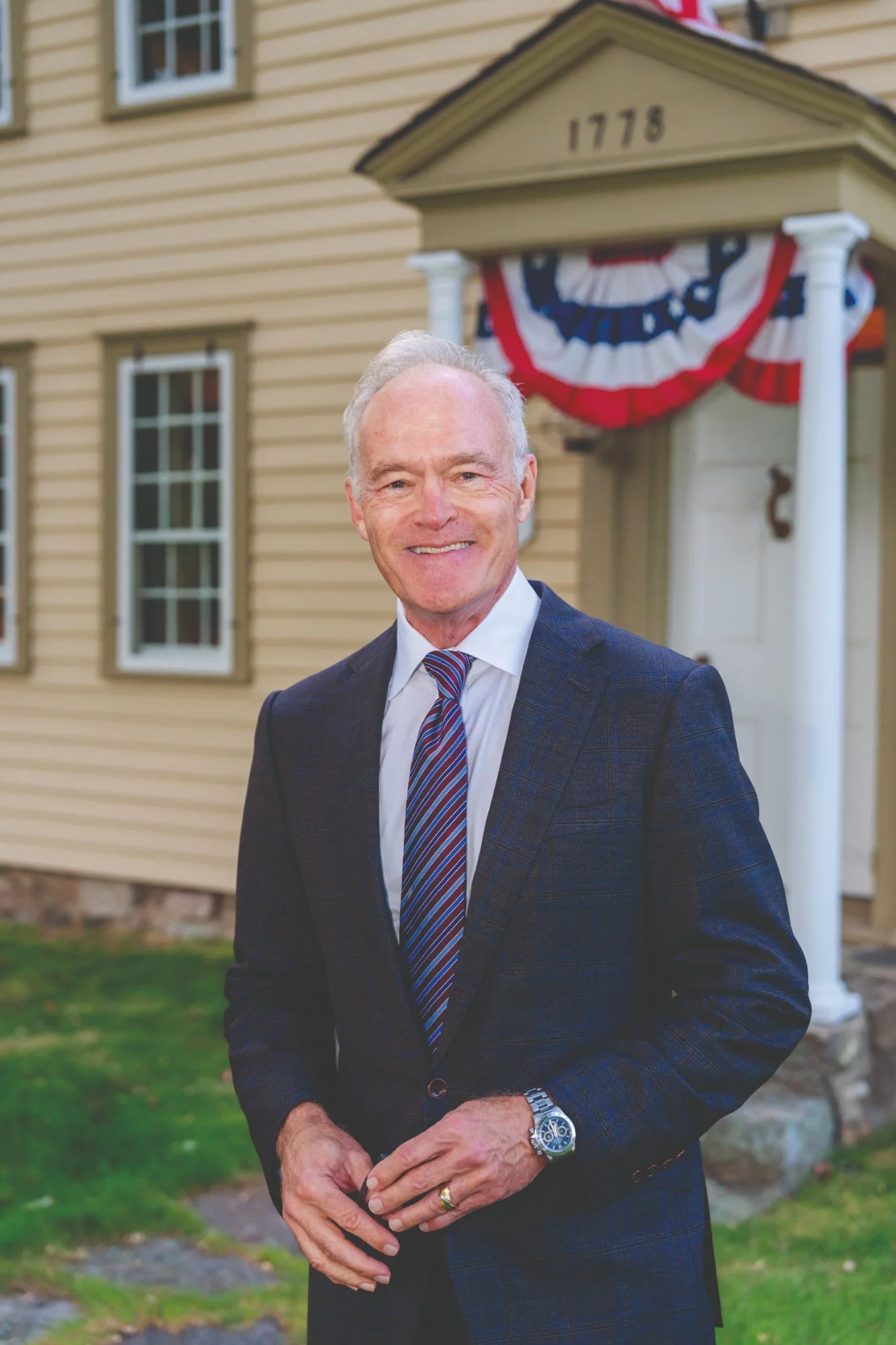
As I’ve learned more and more about the Mathers, I’ve become more and more impressed with them. The documentary is a ‘must see’. …We could all take a lesson from their altruism.”